




The Starting Point

When we audited the account, it looked like a successful setup. The "best performing" campaign showed impressive ROAS numbers.
When we dug deeper, we found the truth: every single click was branded traffic.
The previous agency had built what looked like a prospecting campaign, but it was really an expensive way to buy the brand's own name. That revealed three critical mistakes:
- Brand contamination: mixing brand and non-brand traffic created false ROAS metrics.
- Single-market limitation: international expansion was treated as a simple location targeting change.
- Narrow targeting focus: big opportunities in adjacent markets were being missed.
The Complete Solution Framework
Here's what we built for the brand:
- Clean data foundation: we rebuilt the account structure with dedicated brand campaigns for each market and separate prospecting campaigns with strict negative keyword lists.
- Multi-market infrastructure: instead of simple location targeting, we created separate Google Merchant setups for New Zealand, Singapore and the US, each with dedicated product feeds and country-specific optimisation.
- Feed multiplication: using DataFeedWatch, we created multiple versions of the same products with different angles and keywords to dominate search results.
- YouTube prospecting engine: we turned unused social media video content into conversion-focused YouTube campaigns that brought in revenue from cold traffic.
- MOFU market expansion: we found opportunities in the weight-loss market by targeting problem-focused searches rather than just product-specific terms.
1. The Brand Contamination Problem
This is the biggest mistake we see agencies make. In the audit we found a "best performing" Performance Max campaign with incredible ROAS numbers. Every single click was branded traffic.
The Three-Fold Problem
First, it inflates your prospecting ROAS. When brand searches get mixed with cold traffic, your campaign metrics become meaningless. Research shows that brand contamination can account for 30-60% of traffic in prospecting campaigns, with branded traffic typically delivering roughly twice the ROAS of non-branded traffic.
Second, it drives up CPCs on your brand terms. You're competing against yourself in the auction, which increases costs across the whole account.
Third, it prevents accurate performance measurement. You can't make proper scaling decisions without clean data.
The Account Structure Rebuild
We rebuilt the account structure using our brand separation framework:
- Create dedicated brand campaigns. We built separate brand campaigns for each market, targeting only brand-related keywords and exact match brand terms.
- Implement strict negative keyword lists. We created comprehensive negative keyword lists for prospecting campaigns, covering all brand variations and misspellings.
- Restructure Performance Max campaigns. We rebuilt Performance Max with proper exclusions, brand negative keywords and separate asset groups for non-brand messaging.
- Monitor and refine. We set up weekly monitoring of search term reports and the brand vs. non-brand traffic split.
The results were immediate. In the first two months (Aug 1 to Oct 2, 2023), compared with the previous period:
- Sales nearly doubled, up 306K to 623K
- ROAS rose from about 9 to 17.3
- Ad spend rose by only about $1K, to $36.1K
- Clean prospecting data emerged

2. Multi-Country Scaling
Most ecommerce brands make the same mistake when expanding internationally: they change their location targeting and expect results.
That approach fails because Google treats each market differently, you're competing against local brands with an established presence, and you miss market-specific search behaviour.
What actually works is complete separation at the merchant level. We created entirely separate Google Merchant Center setups for each target market:
- Separate Google Merchant Center accounts for each country
- Country-specific product feeds with localised titles and descriptions
- Dedicated Google Ads accounts linked to each merchant setup
- Market-specific campaign structures from day one
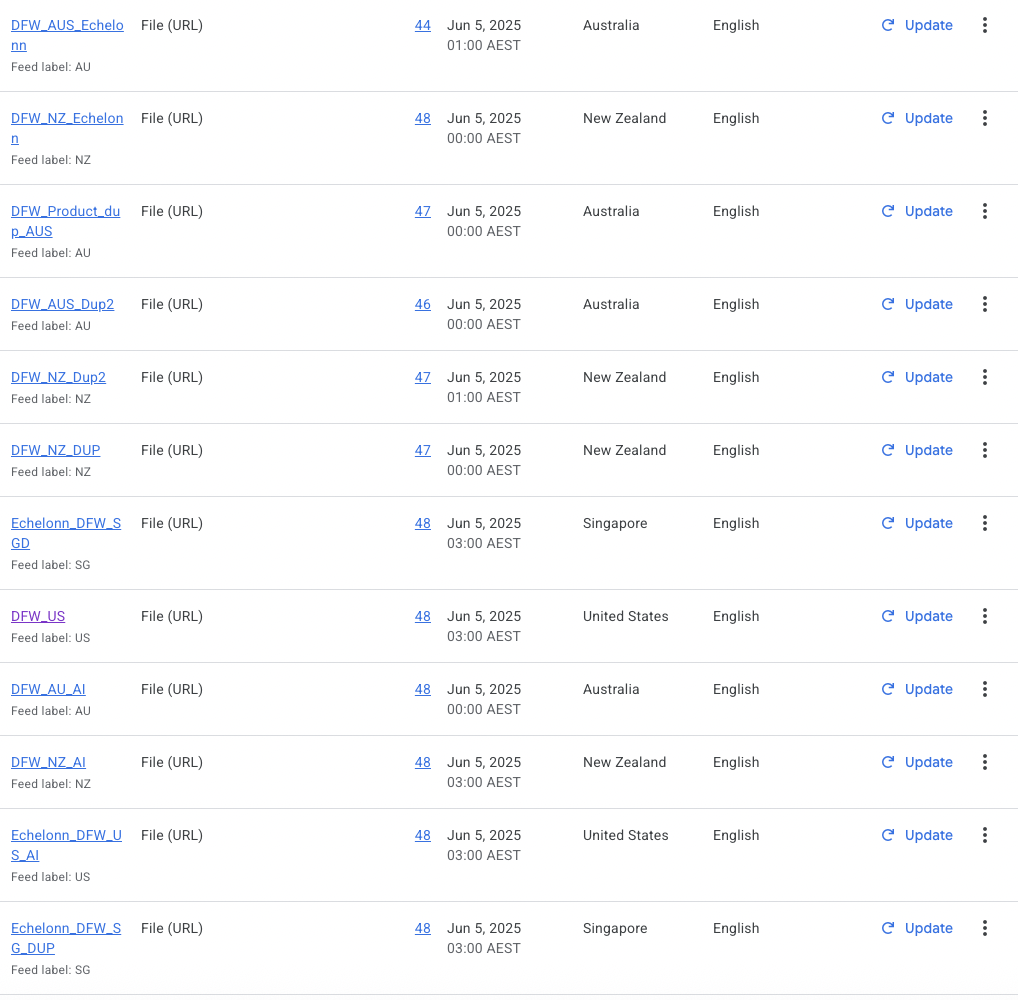
Each market needed different product descriptions. Shoppers in Australia and the US searched for the same product using different language and different benefits, so the copy had to match how each market actually searched.
Market-Specific Optimisation
- New Zealand: similar patterns to Australia but with noticeably higher CPCs. We focused on high-intent keywords during peak evening hours.
- Singapore: mobile traffic dominated. We restructured campaigns to prioritise mobile-first ad formats and lunch-hour traffic.
- US: the biggest long-term opportunity. We created separate campaigns for different US regions, as West Coast performance differed significantly from East Coast results.
The brand went from selling in one market to four, each with its own merchant setup, feeds and campaign structure.
3. Product Feed Multiplication
Most advertisers create one product feed per country and call it done. That leaves money on the table.
Google Shopping and Performance Max rely heavily on product titles to match search queries. So we created multiple versions of the same products, each with a different angle and set of keywords.
We built product variations targeting each search pattern. One product became three different listings with three different angles.
When someone runs a benefit-led search, our optimised feeds can show multiple listings in the same set of Shopping results. That pushes competitors down the page and increases our click probability.
In competitive searches, we often hold several of the visible Shopping results at once.
4. YouTube Prospecting
The brand had strong video assets from its social media campaigns sitting unused. The previous agency had ignored YouTube as a prospecting channel entirely.
Conversion-Focused Video Strategy
Our YouTube campaigns were optimised for actual purchases from day one. We launched conversion-focused video campaigns targeting cold audiences with educational ads about the product's benefits.
The result: YouTube became a working prospecting channel, bringing in revenue from completely new traffic.
Here's the campaign structure:
- Audience targeting: custom audiences based on interests and behaviours
- Creative strategy: educational content addressing specific pain points
- Bidding: optimise for conversions, not views
- Budget allocation: start with 20% of total prospecting budget
Understanding the Customer Journey Across Platforms
YouTube also lifts the channels that come after it. Industry research shows that users who engage with YouTube ads show conversion rate lifts ranging from 12% to 14.6%.
We tracked three key touchpoints:
- Initial exposure: YouTube video view
- Research phase: organic search or direct website visit
- Purchase decision: Shopping campaign click and conversion
5. MOFU Expansion: Capturing the Weight-Loss Market
When we analysed the account, the brand was only targeting bottom-funnel searches for its core product type.
But what about the thousands of people searching for solutions to problems the product could solve?
Moving Beyond Product-Specific Targeting
Instead of waiting for customers to find us, we identified where our ideal customers were already searching. The weight-loss market was a big opportunity.
Research shows that up to 60% of adjacency growth can come from existing customer base penetration into related market segments.
Keyword Research for Market Expansion
We used Amazon's search suggestions and Google's Keyword Planner to find opportunities:
- Problem-focused searches: "how to lose weight fast"
- Solution-focused searches: "best meal replacement shakes"
- Comparison searches: "best weight loss supplements"
Dedicated Landing Pages for New Segments
We built landing pages that spoke directly to each search intention:
- Problem acknowledgment: "Struggling to find a healthy meal replacement?"
- Solution introduction: how the product fits into their nutrition routine
- Benefit explanation: scientific backing and customer results
- Social proof: reviews from customers with similar goals
- Clear call-to-action: product recommendation with a special offer
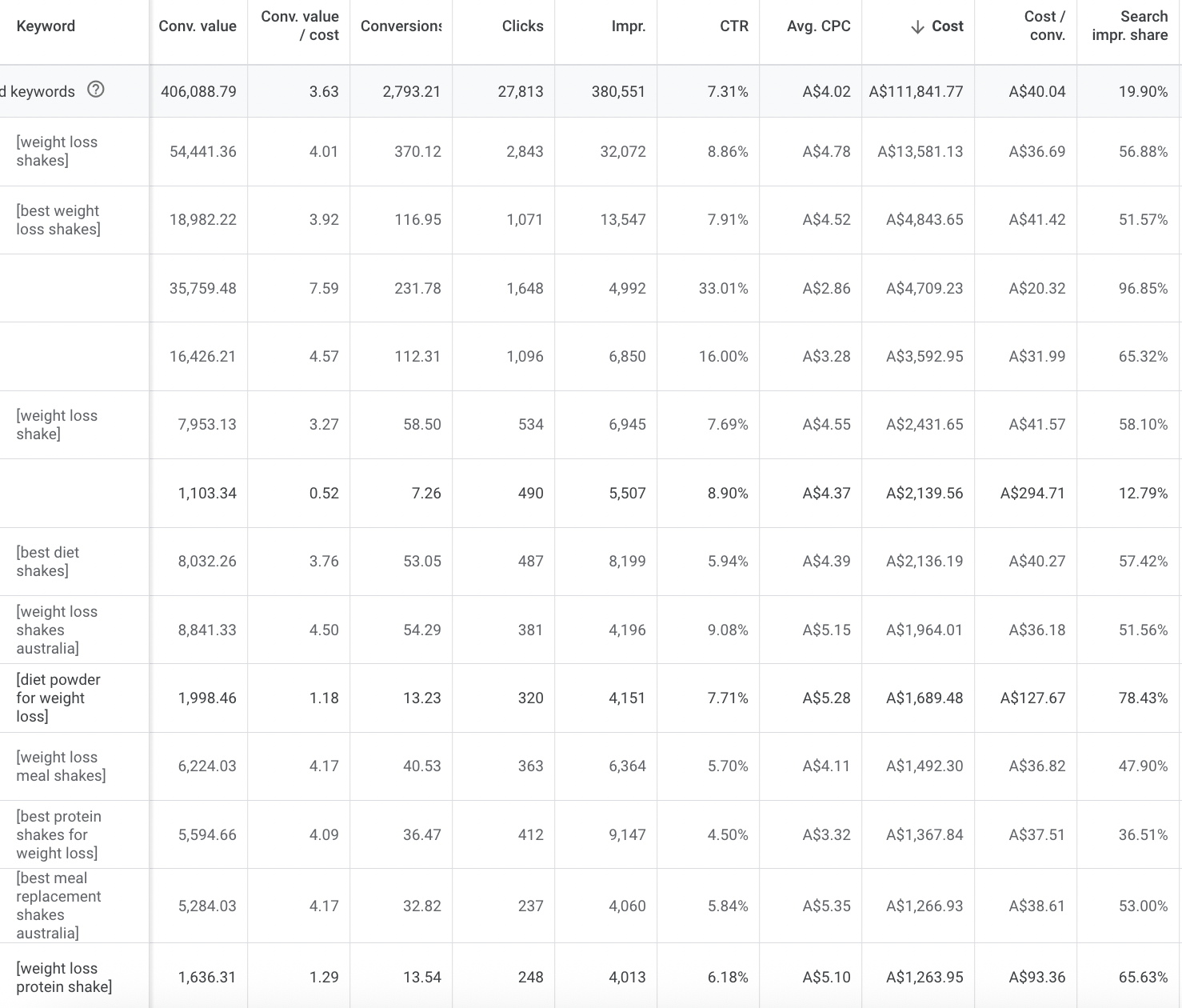
These weight-loss keywords alone have generated over A$406K in conversion value at a 3.63 ROAS, from searches the account was not touching before.
Conclusion
That's the framework that took this brand from a single-market business to four markets and 40M in added Google Ads revenue. It works because it builds proper foundations before trying to scale.
The Five-Pillar Framework
- Clean brand separation: eliminate contaminated data
- Strategic international expansion: build separate merchant setups
- Feed multiplication: dominate search results
- YouTube prospecting: put your video content to work
- MOFU market expansion: target problem-focused searches
Your Next Steps
Start with brand separation this week. Create dedicated brand campaigns and implement strict negative keyword lists. This single change will transform your decision-making within 30 days.
The framework works. The question is whether you'll implement it systematically rather than trying to do everything at once.