




A musical instrument brand came to us with a YouTube campaign that had stalled. Over roughly five months we scaled it to $420K a month in spend, survived Google force-converting every YouTube campaign into Demand Gen, rebuilt the account from scratch with BFCM weeks away, and held ROAS around 2x through the busiest weeks of the year. Here is how.
The Objective
Keep growing the account and unlock a new top-of-funnel channel to bring in more new customers and sales, while keeping top-of-funnel efficiency at a 1.8 to 2.0x ROAS. The business was focused on making a profit on the first order, so scale could not come at the cost of efficiency.
The Backstory
The brand had a solid first half of 2025, averaging around $28,000 a month in ad spend at a 3.7x ROAS. Most of the traffic came from Performance Max, Shopping and Search. They also had a strong Meta presence, which kept demand for branded searches high.
They were already following the best practices behind those results: branded and prospecting campaigns segmented, product feeds optimised, reviews synced to product listings, and much more. But they always felt they could do more if they could get the product in front of new audiences outside of Meta. So they launched their first YouTube campaign.
The first couple of months of running it themselves looked very promising. Spend grew quickly from a $3K a month start with just a couple of video assets, sales were rolling in, and ROAS was on target. Then results plateaued. It looked like they had hit the ceiling.
Month 1: Audit First, Then Scale What Works
They came to us in August. There was clearly something there, but they did not have the time or the know-how to take it to the next level.
We started with a deep audit of the existing setup. We went through the videos and their view-through rates second by second to understand which hooks and videos were actually grabbing attention and getting people to the site. We also dug into audiences, placements and performance by device.
Contrary to the usual assumption, it was not YouTube Shorts on mobile driving the results. It was landscape videos on computers and TVs that were making this work.
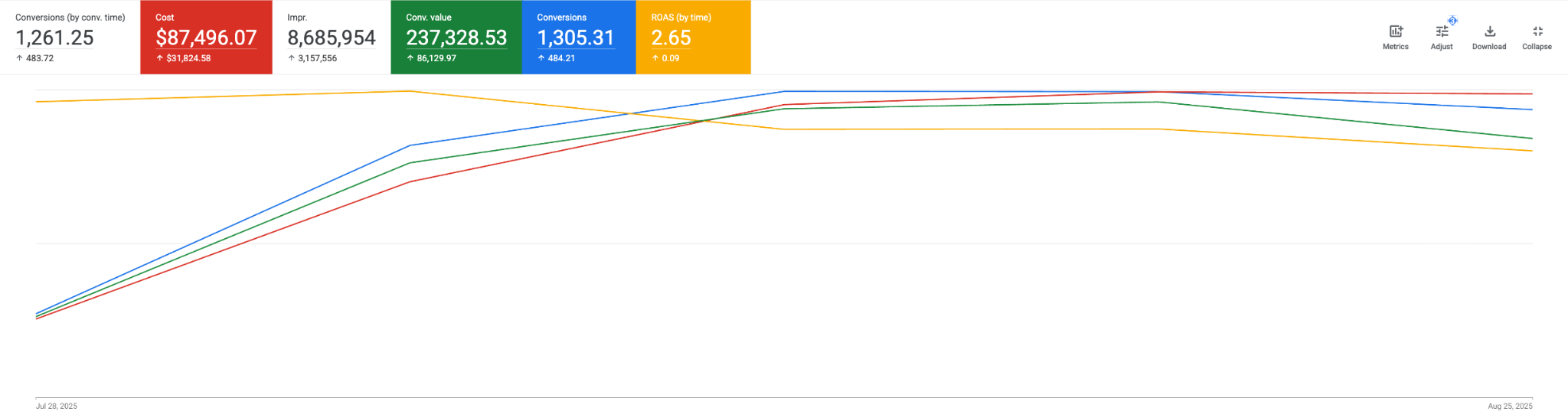
Based on those insights, we optimised and kept scaling what was working for as long as we could. That let us quickly ramp the original campaign from $1.5K to $4K a day.
Month 2: Scaling Horizontally
At that point the original campaign was maxing out. Even when we added budget, Google could not spend it all. So we started scaling horizontally.
- New campaigns with dedicated targeting. We launched campaigns built around specific audiences and specific placement and device targeting.
- A dedicated testing campaign. We launched a separate campaign purely for testing, where we fed in new video assets to see their potential before rotating the winners into our main campaigns.
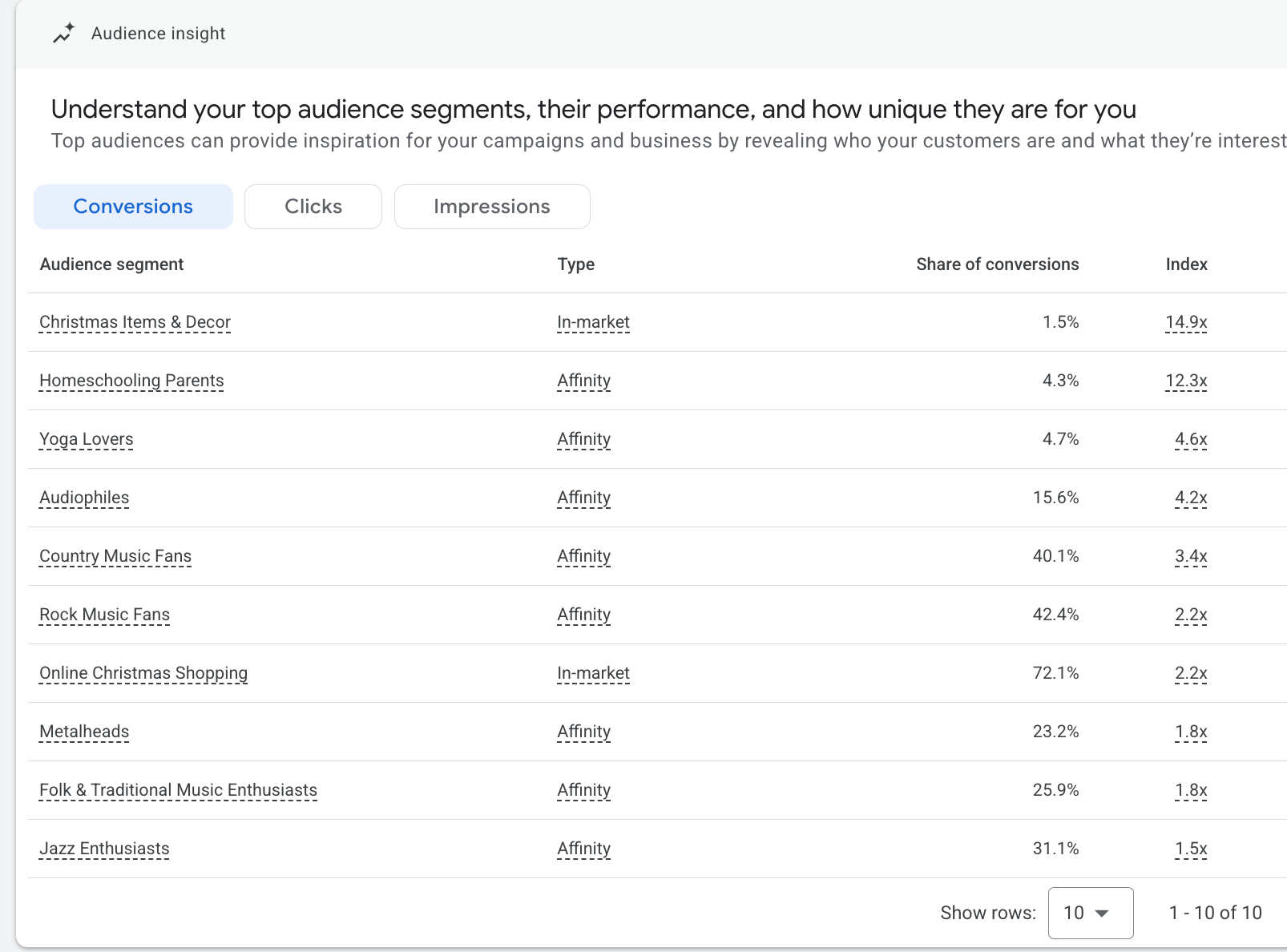
The audience insights we pulled were a big part of how we built the new campaigns, especially the in-market and affinity segments.
The testing campaign helped us find potential winners for the main campaigns. It also meant every new video got a fair chance to prove itself. Launched straight into the main scaling campaign, a new video would have received very little spend and never had a chance to show what it could do.
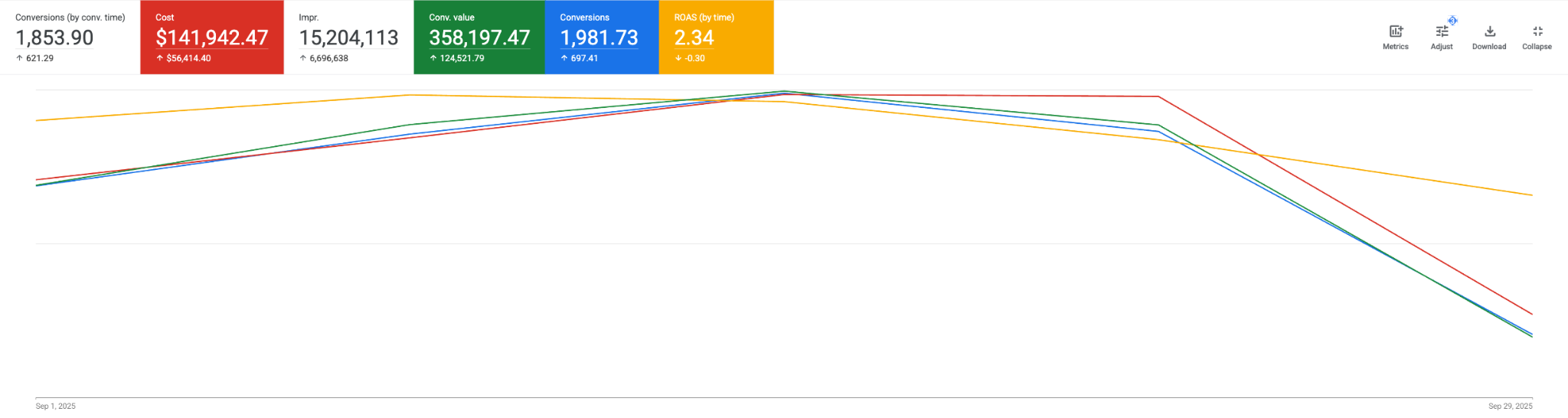
By mid-September we were spending $5K a day on YouTube alone.
Month 3: Google Forces the Switch to Demand Gen
At the end of September, Google threw us a curveball. Without any prior notice, all of the YouTube campaigns were automatically disabled, removed and converted into Demand Gen campaigns. "Removed" essentially means deleted: those campaigns cannot be re-enabled, and they no longer receive conversion data from customers who were still in the funnel.
At least each campaign was converted into a new Demand Gen Video campaign with almost the same settings. But after the first couple of days it was like looking at a completely different account. Google kept spending at our previous levels, and performance literally halved. Because the new campaign had essentially the same setup, targeting, settings and videos, we kept pushing it with reduced budgets for the first week. It just did not take.
Starting Again From Scratch
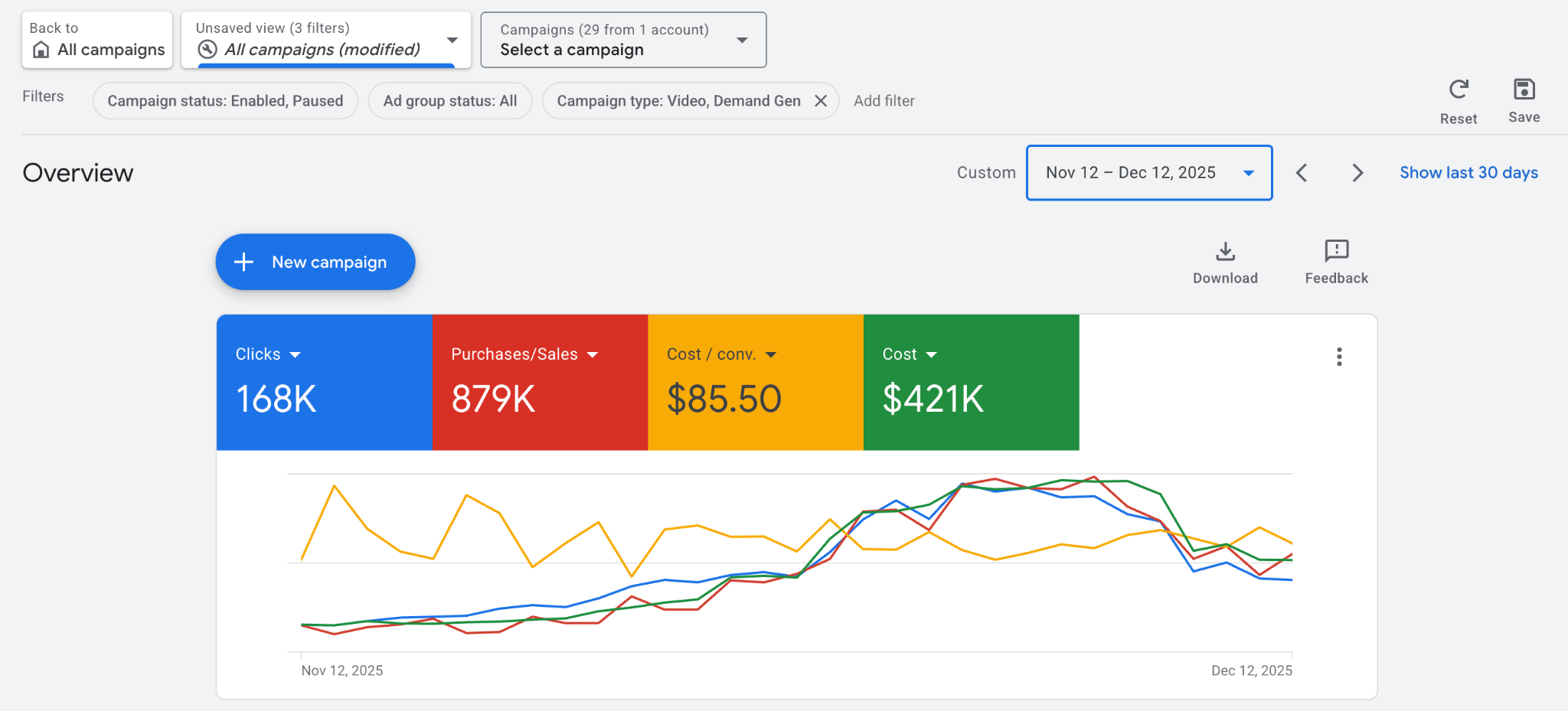
That left us with a big strategic decision: pause every converted YouTube-turned-Demand Gen campaign and rebuild from scratch. Not ideal after scaling to around $140K a month in spend, but it had to be done. And with BFCM around the corner, we had to move fast.
We reworked the strategy, improved the setup and relaunched everything within a day. We went straight back to $5K a day, with open bid strategies (maximize conversion value) and a better campaign structure:
- One campaign running the original settings.
- One campaign dedicated to TV and computer placements, with open audiences.
- One campaign dedicated to TV and computer placements, targeting selected top-performing audiences.
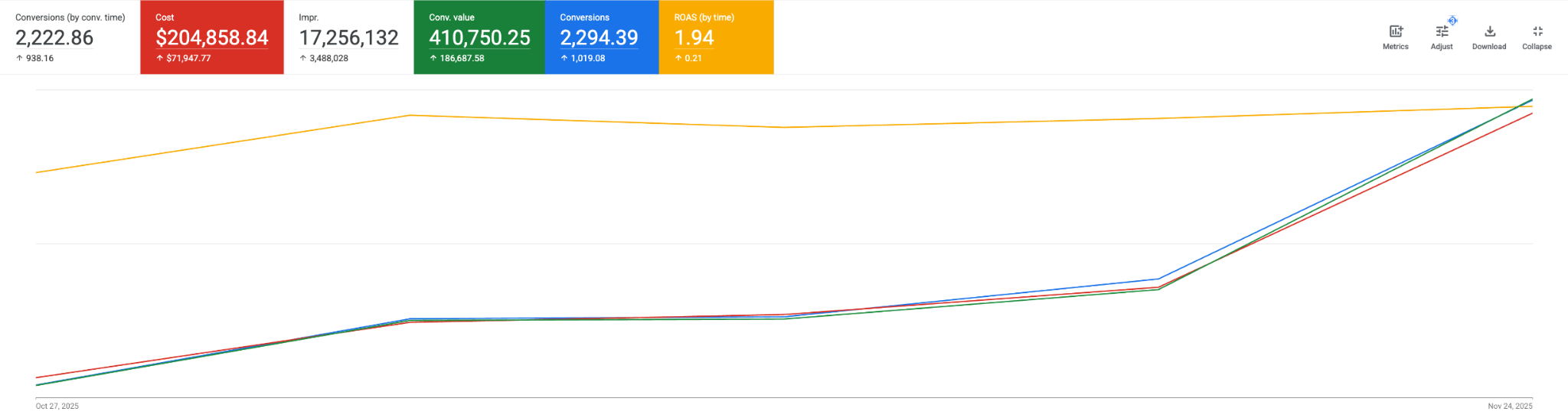
The algorithm still needed a couple of weeks to re-learn, but performance was a different story this time. We were back at around 2x ROAS, scaling budgets every 3 to 4 days and growing rapidly.
Months 4 and 5: BFCM
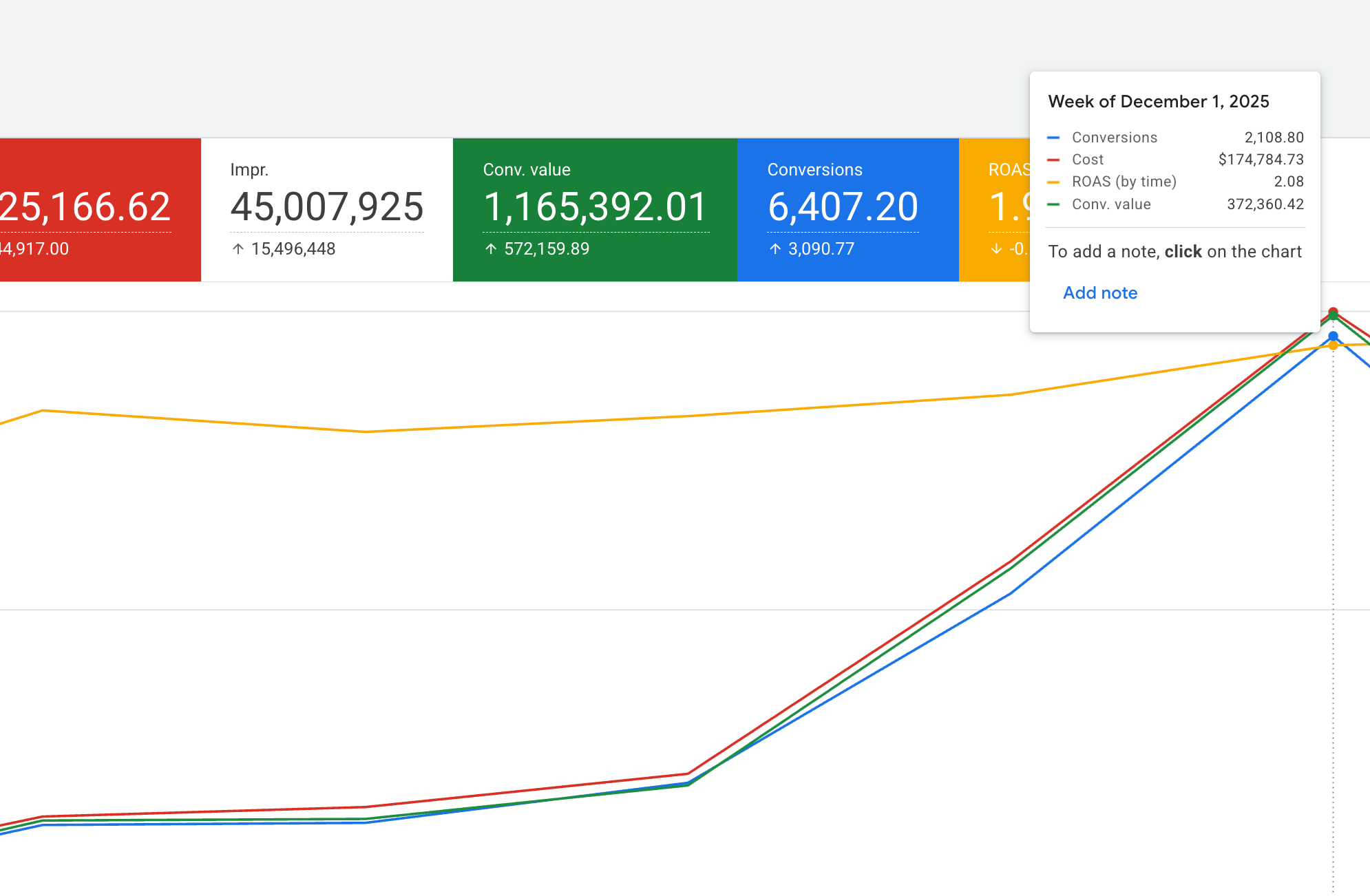
By the end of November, the rebuilt setup was running smoothly. In the one to two weeks before BFCM we were able to scale budgets daily.
- BFCM week: $101K in spend at a 1.89x ROAS.
- Week of December 1: $174K in spend at a 2.08x ROAS.
We are still running this setup today. We analyse audience, device and placement insights daily, test new creatives, track their performance and decide whether they are strong enough for the main scaling campaigns. We also work closely with the brand, suggesting frameworks and templates for new videos based on the insights we get out of Google each week.
Steal This for Your Brand
- Send YouTube traffic to the right landing page. Invest the time and research into choosing it. If you are sending viewers to your homepage, odds are the campaign will never work. Sometimes the problem is not the campaign setup or even the videos.
- Keep testing until you find your winning video. We tested 50+ videos in a couple of months, yet 3 winners do all the work, and 1 of them is the absolute killer. Google is not Meta: you do not always need to rotate assets frequently to succeed.
- Check where your conversions actually come from. Do not assume Shorts on mobile is the answer. For this brand, landscape videos on computers and TVs drove the results.
- Test new videos in their own campaign. A dedicated testing campaign gives every new asset real spend and a fair shot before it goes into your scaling campaigns.
- Scale horizontally when a campaign maxes out. When Google cannot spend more budget, launch new campaigns with dedicated audience, placement and device targeting.