
.svg)
Google Ads Optimization Score: Should You Trust It?


Google knows a lot about how its own platform works. But it doesn't know your margins, your CPA ceiling, or how aggressively you can afford to grow this quarter.
That's the real issue with the Optimization Score sitting at the top of every Google Ads account. It looks like a report card. It isn't one. It's a checklist of actions Google estimates could improve your account, rather than a measure of your specific profitability targets.
Chasing that number and running a profitable account are two different jobs. Sometimes they line up. Often they don't, and knowing which situation you're in matters more than the percentage itself.
The Short Answer: Should You Trust Your Optimization Score?
Partly, and only for specific things. Optimization Score is a reasonable prompt to check your account for genuine oversights: a conversion action that quietly stopped tracking, an ad group with no approved ads left, a feed issue limiting Shopping visibility. For that kind of account hygiene, it's a useful trigger to go and look.
It is not a reliable signal of whether your account is profitable, and it was never built to be one. A campaign with a tight CPA target can have a lower Optimization Score, while a campaign spending aggressively on irrelevant broad match queries can have a higher one. The score can't tell the difference, because it isn't measuring profit. It's measuring how closely your account follows Google's own recommendations.
What Google Ads Optimization Score Actually Measures
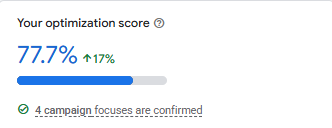
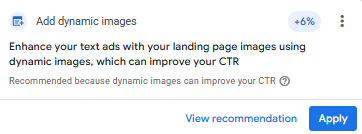
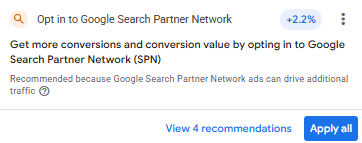
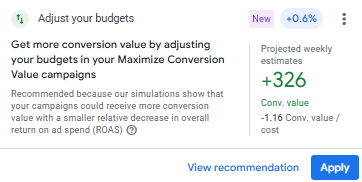
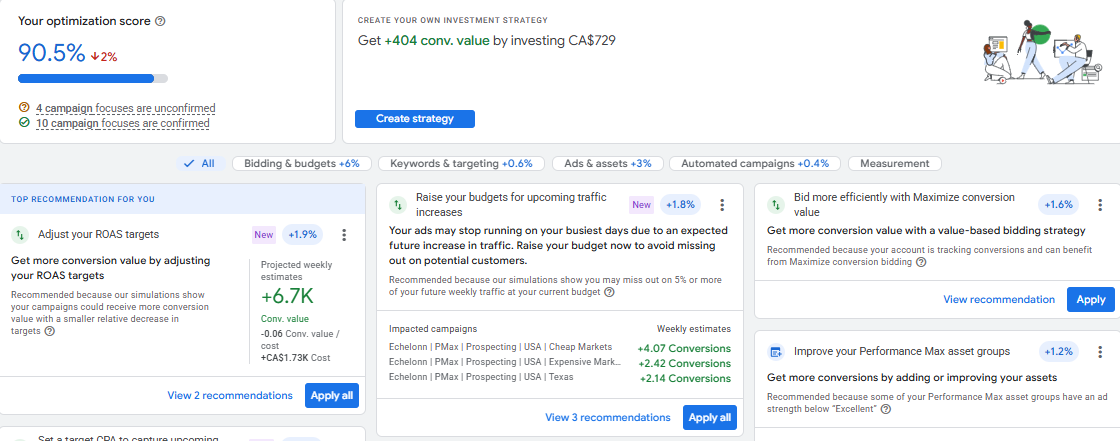
Optimization Score runs from 0 to 100%, calculated at both the account and campaign level. Every recommendation Google generates for your account comes with an estimated "score uplift" – how much your score would rise if you applied it. Apply enough recommendations, or dismiss the ones that don't fit, and the score can move toward 100%.
That last part surprises a lot of advertisers: dismissing a recommendation can increase your score too. You don't need to say yes to everything to reach a high number. You need to review each recommendation and decide whether it makes sense for your account.
Here’s what this looks like in practice: Google Ads shows an estimated score uplift for each recommendation, indicating how much your Optimization Score could increase if you apply it.
Optimization Score vs Quality Score
These two get confused often, and the confusion can lead to wrong decisions. Quality Score is a keyword-level diagnostic based on expected CTR, ad relevance and landing page experience. Optimization Score evaluates Google's recommendations for your account and estimates their potential impact. Neither one is a business performance metric. Quality Score helps you diagnose ad quality; Optimization Score helps you identify recommendations worth reviewing.
Why a 100% Optimization Score Doesn't Mean a Better Account
Many of the recommendations behind that score can push the account towards more reach, more budget or more automation. Broaden your match types. Raise your budget cap. Let Google auto-generate assets. Each one comes with a plausible-sounding uplift percentage.
None of those recommendations know what you're willing to pay for a customer. They don't know your margin, your current CPA target, or that you deliberately capped a campaign's budget because scaling it further last month dropped ROAS below your floor.
That's the gap. A recommendation can be technically accurate – for example, broad match probably will increase traffic – and still be the wrong call for an account managed against a specific profitability target.
“Google knows how its platform works. It doesn't know your margins, your CPA ceiling, or your strategic constraints.”
Which Google Ads Recommendations Should You Review Carefully?
Not every recommendation deserves the same level of scrutiny. Some genuinely fix something broken. Others shift how your budget gets spent without asking whether that's what you actually want.
Account and tracking fixes are usually worth applying quickly – they tend to repair something rather than reshape strategy. Bidding, budget, and targeting recommendations need a second look, because they're the ones most likely to move spend in a direction your account wasn't built for.
What This Looks Like in a Real Account
When we audited an eCommerce account, auto-apply recommendations were switched on as one of four structural issues limiting the account's growth, alongside an unreliable conversion tracking setup, a neglected Merchant Center, and no negative keyword infrastructure. As part of the initial cleanup in the first two weeks of the engagement, we switched auto-apply off, deployed shared negative keyword lists, and corrected location targeting to presence-only.
That's not a claim that auto-apply recommendations alone caused the account's earlier plateau, or that switching it off alone drove the growth that followed. It was one of several settings identified during the audit and addressed as part of a broader foundation-and-control phase before any scaling began. What it does show is why auto-apply settings belong in an account audit: they determine which changes Google can make without a manual review.
A Practical Framework for Testing Google Recommendations
These are testing guidelines we use internally, not rules set by Google. Treat them as a starting point for evaluating any recommendation that touches bidding, budget, or targeting.
- Wait at least two weeks, and let a campaign generate 15–30 conversions, before judging the impact of a major change
- Change one variable at a time – don't apply a bid strategy switch and a budget increase in the same week
- Cap budget increases at 20% at a time, with a 5–7 day gap before the next adjustment, to let Smart Bidding's learning phase stabilise
Google's own suggested uplift doesn't come with any of these constraints. It's an estimate based on the recommendation in isolation, not a schedule for how to test it safely against your account's actual data.
How to Use Optimization Score Without Letting It Run Your Account
Check the Recommendations tab on a set schedule. Treat it as an audit trigger: a prompt to look, not an instruction to act.
Go through each recommendation individually. Apply the ones that fix a genuine issue. Dismiss the ones that don't fit your account, and remember that dismissing can still move your score – you're not leaving points on the table by saying no.
Review your auto-apply settings carefully, and only enable recommendations where you're comfortable giving Google permission to make that kind of change without you reviewing it first. For most eCom accounts we work in, that's a shorter list than the default settings suggest.
Final Takeaway: Optimization Score Is a Checklist, Not a Scoreboard
Optimization Score has a place in how you manage a Google Ads account. It's a useful way to catch oversights you might otherwise miss, and a poor way to judge whether the account is actually performing.
The number in the top corner will keep climbing toward 100% whether your CPA is holding steady or creeping up every week. Profitability data will tell you which one is happening. The score won't. Use Optimization Score to find things worth investigating. Use your own performance data to decide what actually changes.

Ready To Start Scaling Today?
Scaling Your Favorite eCommerce Brands To The Highest Levels Through Google & YouTube Ads.

.svg)
Get Smarter About How To Scale Your Brand...
Discover Insider Knowledge On How We Scale Brands From 7 Figures All The Way Up To 8-9 Figures With Google Ads.
.svg)
.svg)
"The best Google ads agency there is. You only need to look at the quality of clients and the reviews to understand Jackson and his team are the real deal."

"One of the best in the agency space, great service and exceptional results. Since signing on with Jackson he has become one of our greatest assets when scaling."

"Top tier team & service delivery. Jackson is relentless when it comes to fulfilment & client needs. His attention to detail during the onboarding process ensured exponential results for my coaching business. If you're looking to elevate your ad results & learn a tone of new options/skills that can be implemented to drive more sales to your business then I'd strongly recommend Echelonn."

"From the very first conversation with Jackson and his team, it was clear that we had found a Google Ads agency that prioritises results above all else. Their collaboration between data-driven experts and a skilled copywriter creates a dynamic duo for Google advertising success..."

"Been working with them for 9 months and it's been a great experience. Jackson and his team know what they are doing and always goes above and beyond. If you're looking for a reliable Google ads agency this is the one."

"The best Google ads agency there is. You only need to look at the quality of clients and the reviews to understand Jackson and his team are the real deal."
"One of the best in the agency space, great service and exceptional results. Since signing on with Jackson he has become one of our greatest assets when scaling."
"Top tier team & service delivery. Jackson is relentless when it comes to fulfilment & client needs. His attention to detail during the onboarding process ensured exponential results for my coaching business. If you're looking to elevate your ad results & learn a tone of new options/skills that can be implemented to drive more sales to your business then I'd strongly recommend Echelonn."
"From the very first conversation with Jackson and his team, it was clear that we had found a Google Ads agency that prioritises results above all else. Their collaboration between data-driven experts and a skilled copywriter creates a dynamic duo for Google advertising success..."
"Been working with them for 9 months and it's been a great experience. Jackson and his team know what they are doing and always goes above and beyond. If you're looking for a reliable Google ads agency this is the one."
More Articles Like This.
Find answers to common queries about our services and how we can help you.
.svg)
Google Ads Optimization Score: Should You Trust It?
What Is a Good CTR for Google Ads?
Why More Google Ads Spend Doesn't Always Mean More Revenue
How To Rank Your Google Shopping Ads Multiple Times
Why Your Google Ads Scale Breaks After $X Per Day
How to Tell if Your Google Ads Agency Is Underperforming
Why Your Performance Max Campaign Gets Clicks but No Sales
.png)
Why Your Google Ads Budget Isn't Spending (And How to Fix It)

The Right Way to Run Google Dynamic Search Ads
How to Get New Customers With Google Ads in 2026
Why Your Google Ads CPA Keeps Increasing and How to Reduce It
What Is a Good ROAS for eCommerce Businesses?
How to Set Up Google Ads Conversion Tracking the Right Way
How Much Does a Google Ads Agency Cost?
Why Your Google Ads Are Not Converting
.png)
Average CPC in Google Ads by Industry (And What It Means for Your Strategy)
Performance Max vs. Shopping Campaigns: Which One is Better?

Why Your Google Shopping Ads Get Impressions But No Clicks (Image Optimization Guide)
Why Your Google Ads Are Not Showing

YouTube Ads Targeting Framework That's Driven $10M+ for eCommerce Brands

What Professional Google Shopping Ads Management Looks Like
How Much Do Google Ads Cost in 2026?

Should Your Business Use Google Search Ads or Performance Max?

Performance Max Best Practices for Sustainable Growth
.png)
Google Shopping Ads Audience Targeting: What Actually Impacts Performance
.png)
How to Write Google Search Ads That Actually Convert
.png)
6 Google Shopping Feed Best Practices That Drive Better ROAS
%20(1).png)
How to Get Your Products Recommended by AI (ChatGPT, Google AI & More)
.png)
Common Google Ads Myths That Cost Businesses Money
.png)
7 Benefits of Google Shopping Ads for Your eCommerce Business
.png)
How to Switch Google Ads Agency Without Losing Performance or Data
.png)
Demand Capture vs Demand Generation: Where Google Ads Fits
.png)
How to Prepare Your Business for Working With a Google Ads Agency

How to Avoid Wasting Budget on the Wrong Searches With Google Ads Keyword Match Types
Google Ads Account Ownership: What Businesses Should Know Before Hiring an Agency
.png)
Landing Page Optimization Strategies That Increase Conversions
SEO and Google Ads: How Search Engine Optimization and Paid Search Work Together
Types of Remarketing in Google Ads: How Each One Works and When to Use It
Google Ads Keyword Research: How to Find Keywords That Actually Convert
.png)
What Is Google Performance Max and How Does It Work?
.png)
How Advertorials Support High-Intent Google Ads Funnels
%20(Canva%20Template).png)
How Audience Targeting Works in Google Search Ads (and When to Use It)

Google Ads for New Brands: What to Know Before Spending Your First Dollar
.png)
What Is a PPC Agency – and When It Makes Sense to Hire One
.png)
How to Improve Your Google Ads Conversion Rate

.png)
The Right Way to Link Shopify and Google Ads for Scalable Growth
Google Shopping Campaigns Setup Guide 2025
Confessions of a Google Ads Auditor: The Worst Mistakes We See Inside eCom Accounts
How to Spy on Competitor Google Ads: Complete 2025 Guide
%20(2).png)
7 Questions to Ask Before Hiring a Google Ads Consultant
How to Rank #1 on Google Ads: Complete Shopping & Search Guide 2025
.png)
Learning Google Ads in 2025: The Roadmap Nobody Talks About
%20(1).png)
What Makes a Google Ads Specialist Worth $10,000/Month?

Why Cheap Google Ads Consulting Costs You $180,000+ in Lost Revenue
.png)
Why 99% of Google Ads Experts Fail (& How to Find One That Won’t)
.png)
5 Google Product Feed Fixes for eCom Growth
.png)
Google Ads Campaign Structure: Why 95% of Brands Waste Budget on Mixed Traffic

In-House vs Agency Google Ads: Which Delivers Better ROI in 2025?
.png)
How to Scale Google Ads With a Small Budget | Setup and Optimization

Google Shopping Optimization: 11 Proven Tactics for Maximum ROAS
%20(3).png)
eCom Growth Strategy: How We Scaled a Supplement Brand From $1.9M to $8.6M With Google Ads
%20(4).png)
Google Merchant Center Fix: How to Improve Rankings With Accurate Shipping Times

CTR Is Misunderstood by 95% of the PPC Industry (What to Optimise for Instead)
.png)
Google Ads AI | Manual vs Automated Campaign Performance

Complete YouTube Ads Guide 2025 | 3 Formats, 5 Principles, Proven Results
%20(2).png)
eCom Growth Strategy With Google Ads in 2025
.png)
Google Marketing Live 2025: 11 Key Takeaways for Marketers
%20(1).png)
YouTube Advertising Strategy: How to Drive Results Across Every Format
Google Shopping Feed Optimisation: Tips for Better Results

How Long Does it Take for Google Ads to Work?

Search Ad Strategies to Maximize Sales with Google ads for eCommerce (2024)

2025 Google Shopping Ads: Ultimate Guide, Benchmarks, and Pricing Breakdown

Maximizing ROI with Advanced Google Shopping Bid Strategies and Automated Bidding