
.svg)
What Is a Good CTR for Google Ads?


Ask five PPC people what a good CTR looks like and you'll get five different numbers, usually pulled from five different reports. That's not because nobody knows the answer. It's because the question itself is incomplete. A 2% CTR on many Display campaigns would look strong. The same 2% on a branded Search campaign would mean something very different. CTR only means something once you know which channel, which audience temperature, and which stage of the funnel you're actually looking at.
This article breaks down what counts as a good CTR across Search, Shopping, Performance Max, Display and YouTube, why the number moves so much between them, and – more importantly – how to read your own CTR instead of chasing someone else's average.
The Short Answer: What Is a Good CTR for Google Ads?
For Google Search campaigns, 6.64% is the latest reported average CTR for 2026 across more than 13,000 Search advertising campaigns analysed by WordStream and LocaliQ between April 2025 and March 2026. For Shopping, an older analysis from 2023 states the average across all industries is 0.86%.
But don't treat them as targets. The same benchmark stated above for Search shows substantial differences between industries. Average CTR ranges from 5.56% for automotive repair, service & parts to 12.75% for arts & entertainment. Finance & insurance sits at 9.83%, while furniture is at 6.57%.
That variation is the point. There is no single CTR number that tells you whether a Google Ads campaign is performing well. A useful CTR benchmark should always be considered alongside:
- Campaign type
- Search intent
- Brand vs. non-brand traffic
- Audience temperature
- Ad position and visibility
- Conversion rate
- Cost per conversion
- Revenue or ROAS
And the benchmark for Search shouldn't simply be copied across to Shopping, Performance Max, Display or YouTube. Each of those formats has a fundamentally different relationship between impressions and clicks, so treating CTR as one universal metric across an account is where many of these conversations go wrong.
Good CTR Benchmarks by Google Ads Campaign Type
Though there are no universal CTR targets, you can use these as benchmarks when you analyse your results by a campaign type:
The key takeaway is simple: Use external benchmarks to understand where you sit. Use your own account data to decide whether something is actually wrong.
Why CTR Varies So Much
Search Visibility
Ads that appear more prominently on the Search results page generally have a greater opportunity to receive clicks. That means a weak CTR doesn't automatically mean your headline or offer is bad.
Before rewriting the ad, look at your Search top impression rate and Search absolute top impression rate. Google removed the old Average Position metric in 2019 and recommends these impression-based metrics instead. If visibility has changed significantly, CTR can change with it.
Search Intent
The closer the user's search is to the problem your product or service solves, the more likely the ad is to earn a click. This is why you shouldn't assume that broad, phrase or exact match will always produce a higher CTR. What matters is the intent behind the searches each match type is actually capturing.
The more useful question is: What searches are actually triggering the ad, and how closely do they match the offer? A broad campaign attracting a wide mix of loosely related searches can behave very differently from a campaign capturing highly specific commercial intent. Look at the actual search terms before drawing conclusions from the CTR column.
Brand vs. Non-Brand
Brand Search usually produces substantially higher CTR than non-brand Search because the user already knows the company and is actively looking for it. That's why comparing your brand campaign with your generic acquisition campaigns can produce a misleading benchmark. A 10% CTR may be disappointing for one brand campaign and excellent for another non-brand campaign.
Ad Format and Assets
Ads don't exist in isolation. A Search ad with a full set of sitelinks, callouts and structured snippets usually takes up more real estate and pulls more clicks than a bare headline and description. A Shopping listing with a sale badge and a competitive price typically wins more clicks than an identical listing without one.
Audience Temperature
A returning visitor, an existing customer and someone discovering your brand for the first time don't have the same reason to click. Remarketing audiences will often behave differently from cold prospecting audiences. The same creative can therefore produce very different CTRs depending on who is seeing it.
How to Read Your CTR: A Simple Diagnostic Framework
The number on its own doesn't tell you much. So, don’t ask “Is my CTR good?”. Instead, a better question would be “What is my CTR telling me about the traffic I'm buying?”. A simple way to approach it is to read CTR alongside conversion rate.
“A high CTR with low conversions isn't necessarily a CTR problem. Look at search intent, offer, landing page, tracking and message match before changing the ad.”
CTR's Role in Quality Score
Expected CTR is one of three components that make up Quality Score, alongside ad relevance and landing page experience. Quality Score itself is a diagnostic 1–10 rating; it doesn't enter the auction directly. What does enter the auction is the same set of underlying quality signals, which factor into Ad Rank at auction time, together with your bid and the expected impact of ad assets.
So don't optimise for a Quality Score of 10 just because the number looks good. Instead, use the components to diagnose the problem. If expected CTR is below average for a keyword, for example, investigate how closely the ad matches the keyword and the user's search intent. The issue may be the ad copy itself, but it can also indicate a mismatch between the keyword and the ad. If ad relevance is weak, look at how closely the ad matches the user's search intent. If the landing page experience is weak, look at what happens after the click.
The practical takeaway: ad quality can influence Ad Rank and, as a result, the price you pay for clicks. Improving expected CTR through better relevance and stronger ad messaging can contribute to more efficient Search traffic, but CTR should never be optimised in isolation.
What Actually Improves CTR?
Search: Relevance, Copy and Assets
The fastest way to improve Search CTR is tighter ad group structure: a smaller set of closely related keywords matched to ad copy that speaks directly to that intent, rather than one broad ad group trying to cover many different search terms. Once structure is right, testing becomes worthwhile: run responsive ad variants for a minimum of two to three weeks and, as a practical benchmark, wait for at least 200 clicks per variant before calling a winner. Fill out every available asset (sitelinks, callouts, structured snippets) since Google factors expected asset impact directly into Ad Rank.
Shopping and PMax: Product Presentation
For Shopping and Performance Max, the feed is one of the biggest inputs into how products are represented. Titles, images, attributes, pricing and other product information all influence what users see before they decide whether to click. That makes CTR particularly useful as a diagnostic signal for product presentation. If impressions are strong but clicks are weak, investigate:
- Product titles
- Main images
- Price competitiveness
- Promotions
- Product relevance
- Search terms
- Product segmentation
- Competitive positioning
Display and YouTube: Look at Creative First
Display and YouTube CTR is a creative problem first. On YouTube specifically, the issue is almost always the hook, the offer, or how clearly the value proposition lands in the first few seconds. Polished, ad-like creative tends to underperform raw, native-feeling content in these formats, particularly on Shorts, because viewers are in a consumption mindset rather than a buying one.
Final Takeaway: CTR Tells You Something Only When You Read It in Context
CTR is useful because it tells you whether people are choosing your ad, listing or creative when they see it. But it doesn't tell you whether that click was valuable.
A 6.64% CTR might be perfectly healthy for one Search campaign and completely unremarkable for another. The same applies across Shopping, Performance Max, Display and YouTube, where campaign mechanics and audience behaviour are fundamentally different.
So use benchmarks as a reference point, not a target. Compare CTR within the same channel, campaign type and audience context. Then look at what happens after the click: conversion rate, CPA, conversion value and ROAS.
If CTR is low, find out why. If CTR is high but conversions are weak, find out why. And if both are strong, focus on whether you can scale the result profitably. The goal isn't to get more clicks. It's to get more of the right clicks.

Ready To Start Scaling Today?
Scaling Your Favorite eCommerce Brands To The Highest Levels Through Google & YouTube Ads.

.svg)
Get Smarter About How To Scale Your Brand...
Discover Insider Knowledge On How We Scale Brands From 7 Figures All The Way Up To 8-9 Figures With Google Ads.
.svg)
.svg)
"The best Google ads agency there is. You only need to look at the quality of clients and the reviews to understand Jackson and his team are the real deal."

"One of the best in the agency space, great service and exceptional results. Since signing on with Jackson he has become one of our greatest assets when scaling."

"Top tier team & service delivery. Jackson is relentless when it comes to fulfilment & client needs. His attention to detail during the onboarding process ensured exponential results for my coaching business. If you're looking to elevate your ad results & learn a tone of new options/skills that can be implemented to drive more sales to your business then I'd strongly recommend Echelonn."

"From the very first conversation with Jackson and his team, it was clear that we had found a Google Ads agency that prioritises results above all else. Their collaboration between data-driven experts and a skilled copywriter creates a dynamic duo for Google advertising success..."

"Been working with them for 9 months and it's been a great experience. Jackson and his team know what they are doing and always goes above and beyond. If you're looking for a reliable Google ads agency this is the one."

"The best Google ads agency there is. You only need to look at the quality of clients and the reviews to understand Jackson and his team are the real deal."
"One of the best in the agency space, great service and exceptional results. Since signing on with Jackson he has become one of our greatest assets when scaling."
"Top tier team & service delivery. Jackson is relentless when it comes to fulfilment & client needs. His attention to detail during the onboarding process ensured exponential results for my coaching business. If you're looking to elevate your ad results & learn a tone of new options/skills that can be implemented to drive more sales to your business then I'd strongly recommend Echelonn."
"From the very first conversation with Jackson and his team, it was clear that we had found a Google Ads agency that prioritises results above all else. Their collaboration between data-driven experts and a skilled copywriter creates a dynamic duo for Google advertising success..."
"Been working with them for 9 months and it's been a great experience. Jackson and his team know what they are doing and always goes above and beyond. If you're looking for a reliable Google ads agency this is the one."
More Articles Like This.
Find answers to common queries about our services and how we can help you.
.svg)
What Is a Good CTR for Google Ads?
Why More Google Ads Spend Doesn't Always Mean More Revenue
How To Rank Your Google Shopping Ads Multiple Times
Why Your Google Ads Scale Breaks After $X Per Day
How to Tell if Your Google Ads Agency Is Underperforming
Why Your Performance Max Campaign Gets Clicks but No Sales
.png)
Why Your Google Ads Budget Isn't Spending (And How to Fix It)

The Right Way to Run Google Dynamic Search Ads
How to Get New Customers With Google Ads in 2026
Why Your Google Ads CPA Keeps Increasing and How to Reduce It
What Is a Good ROAS for eCommerce Businesses?
How to Set Up Google Ads Conversion Tracking the Right Way
How Much Does a Google Ads Agency Cost?
Why Your Google Ads Are Not Converting
.png)
Average CPC in Google Ads by Industry (And What It Means for Your Strategy)
Performance Max vs. Shopping Campaigns: Which One is Better?

Why Your Google Shopping Ads Get Impressions But No Clicks (Image Optimization Guide)
Why Your Google Ads Are Not Showing

YouTube Ads Targeting Framework That's Driven $10M+ for eCommerce Brands

What Professional Google Shopping Ads Management Looks Like
How Much Do Google Ads Cost in 2026?

Should Your Business Use Google Search Ads or Performance Max?

Performance Max Best Practices for Sustainable Growth
.png)
Google Shopping Ads Audience Targeting: What Actually Impacts Performance
.png)
How to Write Google Search Ads That Actually Convert
.png)
6 Google Shopping Feed Best Practices That Drive Better ROAS
%20(1).png)
How to Get Your Products Recommended by AI (ChatGPT, Google AI & More)
.png)
Common Google Ads Myths That Cost Businesses Money
.png)
7 Benefits of Google Shopping Ads for Your eCommerce Business
.png)
How to Switch Google Ads Agency Without Losing Performance or Data
.png)
Demand Capture vs Demand Generation: Where Google Ads Fits
.png)
How to Prepare Your Business for Working With a Google Ads Agency

How to Avoid Wasting Budget on the Wrong Searches With Google Ads Keyword Match Types
Google Ads Account Ownership: What Businesses Should Know Before Hiring an Agency
.png)
Landing Page Optimization Strategies That Increase Conversions
SEO and Google Ads: How Search Engine Optimization and Paid Search Work Together
Types of Remarketing in Google Ads: How Each One Works and When to Use It
Google Ads Keyword Research: How to Find Keywords That Actually Convert
.png)
What Is Google Performance Max and How Does It Work?
.png)
How Advertorials Support High-Intent Google Ads Funnels
%20(Canva%20Template).png)
How Audience Targeting Works in Google Search Ads (and When to Use It)

Google Ads for New Brands: What to Know Before Spending Your First Dollar
.png)
What Is a PPC Agency – and When It Makes Sense to Hire One
.png)
How to Improve Your Google Ads Conversion Rate

.png)
The Right Way to Link Shopify and Google Ads for Scalable Growth
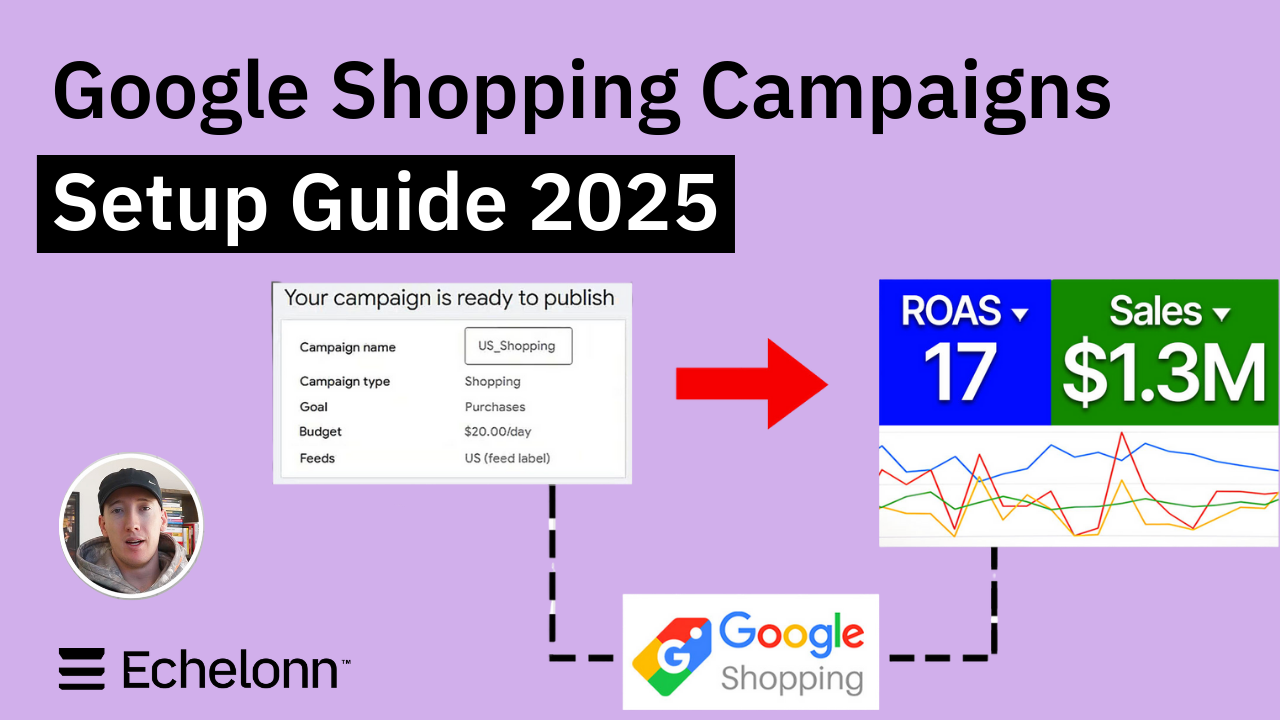
Google Shopping Campaigns Setup Guide 2025
Confessions of a Google Ads Auditor: The Worst Mistakes We See Inside eCom Accounts

How to Spy on Competitor Google Ads: Complete 2025 Guide
%20(2).png)
7 Questions to Ask Before Hiring a Google Ads Consultant
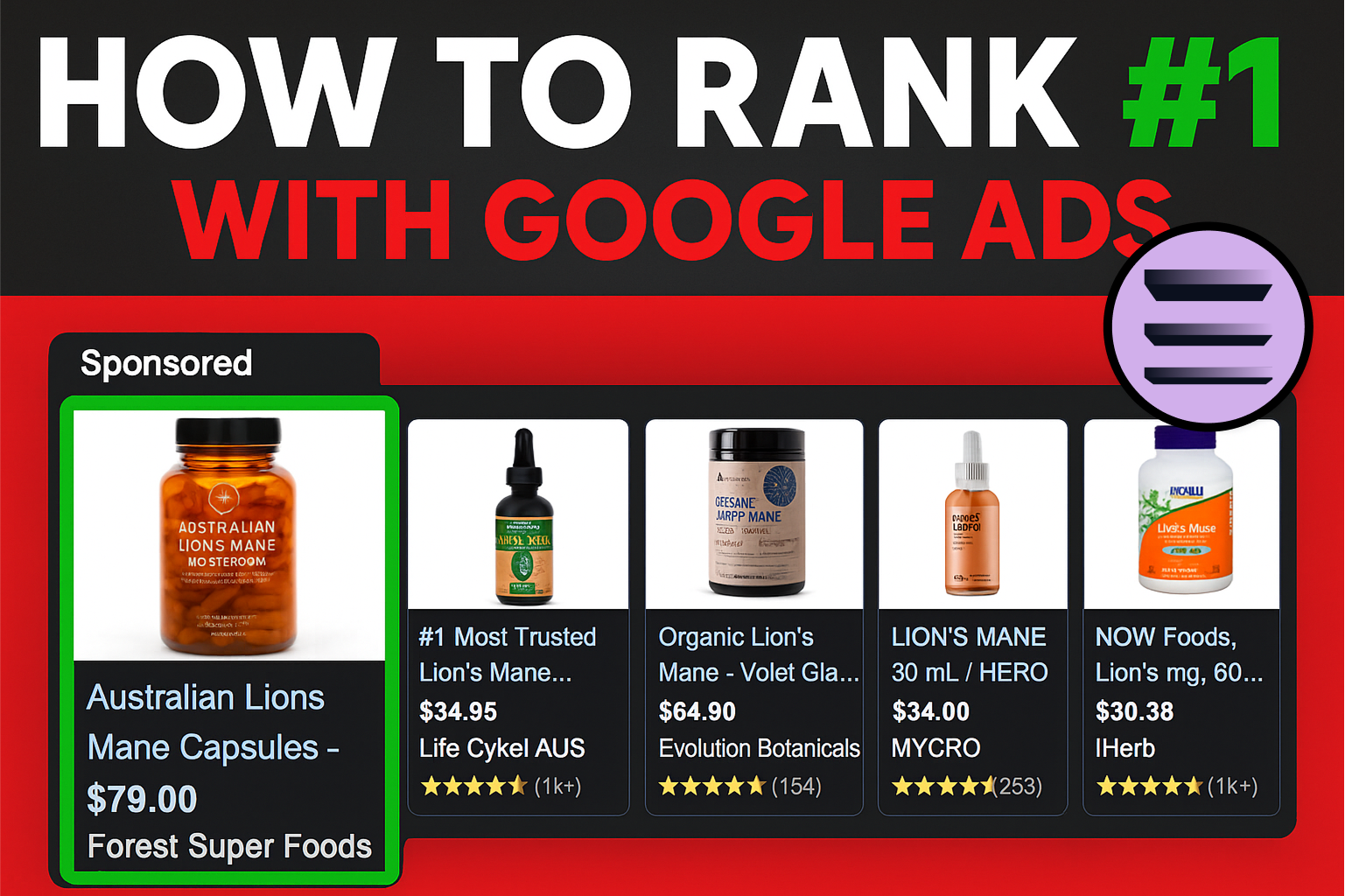
How to Rank #1 on Google Ads: Complete Shopping & Search Guide 2025
.png)
Learning Google Ads in 2025: The Roadmap Nobody Talks About
%20(1).png)
What Makes a Google Ads Specialist Worth $10,000/Month?

Why Cheap Google Ads Consulting Costs You $180,000+ in Lost Revenue
.png)
Why 99% of Google Ads Experts Fail (& How to Find One That Won’t)
.png)
5 Google Product Feed Fixes for eCom Growth
.png)
Google Ads Campaign Structure: Why 95% of Brands Waste Budget on Mixed Traffic

In-House vs Agency Google Ads: Which Delivers Better ROI in 2025?
.png)
How to Scale Google Ads With a Small Budget | Setup and Optimization

Google Shopping Optimization: 11 Proven Tactics for Maximum ROAS
%20(3).png)
eCom Growth Strategy: How We Scaled a Supplement Brand From $1.9M to $8.6M With Google Ads
%20(4).png)
Google Merchant Center Fix: How to Improve Rankings With Accurate Shipping Times

CTR Is Misunderstood by 95% of the PPC Industry (What to Optimise for Instead)
.png)
Google Ads AI | Manual vs Automated Campaign Performance

Complete YouTube Ads Guide 2025 | 3 Formats, 5 Principles, Proven Results
%20(2).png)
eCom Growth Strategy With Google Ads in 2025
.png)
Google Marketing Live 2025: 11 Key Takeaways for Marketers
%20(1).png)
YouTube Advertising Strategy: How to Drive Results Across Every Format
Google Shopping Feed Optimisation: Tips for Better Results

How Long Does it Take for Google Ads to Work?

Search Ad Strategies to Maximize Sales with Google ads for eCommerce (2024)

2025 Google Shopping Ads: Ultimate Guide, Benchmarks, and Pricing Breakdown

Maximizing ROI with Advanced Google Shopping Bid Strategies and Automated Bidding