
.svg)
Google Shopping Ads Audience Targeting: What Actually Impacts Performance


Most discussions around audience targeting in Google Ads assume one thing: that performance comes from finding and targeting the “right” audience. The logic works in platforms where targeting is explicitly defined, such as social media.
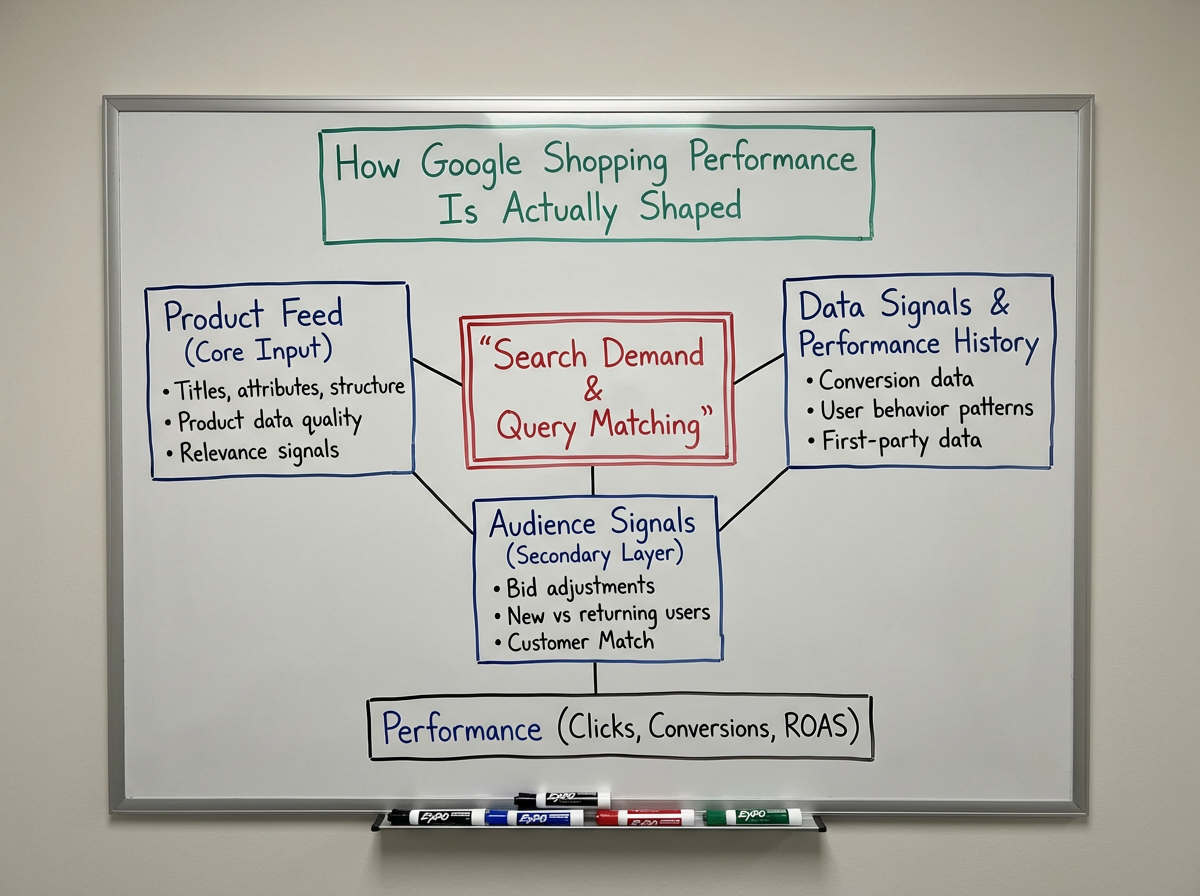
But Google Shopping operates differently. In Shopping, performance is not primarily driven by who you target, but by how well your products match existing demand. Audience signals still play a role, but they do not define targeting in the traditional sense. They influence bidding aggression, not who the ads are shown to.
This is where many strategies fall short. They focus on refining audience definitions, while the core performance drivers – feed structure and optimisation, query matching, and data signals – remain neglected. This article focuses on where audience targeting actually impacts performance in Google Shopping – and where it doesn’t.
Why Audience Targeting Works Differently in Google Shopping
Google Shopping is an intent-driven system. Users express demand through search queries, and Google matches products based on feed data and relevance signals. This approach is fundamentally different from keyword-based targeting, as Shopping relies on product data rather than explicitly defined queries. As a result, targeting is not directly controlled by the advertiser, but shaped by how well product data aligns with existing demand. This creates a different targeting model compared to platforms that have demographic or interest-based targeting.
In Shopping, advertisers provide inputs, and Google determines where and when products will appear. Audience targeting still exists in the system, but acts as a secondary layer, differing significantly from how audience targeting works in Google Search ads. Instead, it adjusts how often your ads are shown, how aggressively the system bids, and how different users are prioritised in the auction.
Because of this, audience targeting strategies can’t compensate for weak inputs. If Google Shopping feed structure and optimisation, or keyword matching are misaligned, targeting only amplifies inefficiencies rather than fixing them. This often leads to CPC volatility without improving conversion quality. In the long run, relying on audience layers to "fix" a poor account structure compromises bidding stability and makes scaling unpredictable.
The Role of Data Signals in Google Shopping Ads Audience Targeting
Google Shopping is closely tied to the quality of data signals available in the business’ Google Ads account. Audience definitions alone are not enough for Google to rely on. It builds its understanding based on historical conversion data, user behaviour, first-party data inputs, and feed-level interactions.
These signals help the system identify patterns about who tends to convert and under what conditions. They are what allows automated bidding to allocate spend across different queries and contexts. When signal quality is strong, audience targeting becomes more effective, leading to more efficient bidding and more consistent prioritisation of high-value users. When signals are weak, performance becomes less predictable, reducing bidding stability and making optimisation less reliable over time.
“Audience targeting in Shopping is not about finding users. It’s about signaling how much value to assign to a match that already exists.”
Where Google Shopping Ads Audience Targeting Impacts Performance
Google Shopping ads audience targeting influences how that demand is prioritised and monetised. Its role is not to decide who your ads match with, but how the system behaves once a match exists. This happens across three areas:
Bid Modulation and Signal Quality
Small differences in user quality have a disproportionate impact on performance. Audience signals influence which segments receive more budget over time. When these signals are aligned with actual conversion behaviour, ad spend naturally shifts toward higher-value traffic, allowing for more advanced bidding strategies to operate with greater precision. When they are not, budget allocation becomes inefficient, often prioritising users who are easier to convert, but not necessarily incremental to eCommerce growth.
New vs. Returning Customer Signals
Blended performance data hides one of the most important distinctions in Google Shopping: new versus returning customers. Without separating them, strong results can be misleading. High ROAS may come from users who already know the brand, while new customer acquisition remains stagnant. This creates a bias in optimisation. Budget naturally shifts toward users with a higher probability of conversion. While this often overlaps with branded search behaviour, returning customers are not limited to branded queries – they can also re-enter through non-branded, prospecting queries. As a result, this bias is not always visible at the query level. To maintain growth, a strategic branded vs. non-branded campaign structure is necessary to ensure that audience signals support acquisition rather than just cannibalising existing demand.
First-Party Data and Customer Match
First-party data introduces a higher level of reliability because it is based on actual user behaviour rather than assumed intent. With Customer Match, advertisers can use their own customer data to give the system clearer reference points for what high-value users look like. This allows the bidding system to differentiate between high-value customers and low-intent visitors with greater accuracy.
The impact is not immediate, but cumulative. Understanding how long it takes for Google Ads to work is critical here; better data leads to more consistent signal patterns, which improves prioritisation over time and results in more stable performance and stronger scaling potential for the entire account. This shift is also reflected in how Google is expanding first-party data capabilities across Analytics and Ads, reinforcing its role as a core input for performance.
From Audience Targeting to Demand Structuring
Why Most Audience Strategies Fail
Most Google Ads strategies fail because they are built on a false assumption: that better targeting automatically leads to better performance. While this logic is standard for platforms like Meta, eCommerce performance on Google Shopping follows a different set of rules. Demand already exists in the form of search queries. The system’s role is to match the products to the demand rather than create it through targeting.
As a result, over-refining audience definitions often has a negligible impact. It doesn’t change how your products match demand or how competitive they are in the auction. Strategies fail when they optimise around the edges instead of focusing on core performance drivers: feed architecture and demand segmentation. This level of complexity is why cheap Google Ads consulting often comes with hidden costs in the form of wasted ad spend and missed scaling opportunities.
The distinction becomes clearer when you stop treating audiences as "people to find" and start treating them as "demand to structure."
Practical Framework for Audience Layering
Understanding audience targeting conceptually is one thing, but implementing it in a structured way is another. The difference comes from how audience signals are used within the system, especially when managing Google Ads manually vs running automated campaigns. Instead of treating audiences as targeting inputs, they should be used to structure demand more effectively.
That typically involves separating them into strategic “lanes”: new vs. returning users, using Customer Match to enrich signals, aligning audience signals with specific campaign objectives, and using audience lists to exclude recent converters from prospecting campaigns. The goal is not to “find better audiences”. It is to create clearer distinctions in how different types of demand are handled. This improves forecasting accuracy, stabilises the account, and ensures that budget allocation is aligned with a broader eCommerce growth strategy driven by business objectives.
Key Takeaway: Predictability Over Precision
Audience targeting in Google Shopping ads is often approached as a way to increase precision. In reality, its role is different. It influences how consistently you capture demand. This distinction is critical, because focusing on precision leads to over-segmentation, constant adjustments, and fragmented data.
For eCom brands, focusing on predictability leads to clearer signal patterns, more stable bidding behaviour, and more reliable performance over time. The goal shouldn’t be to find the “perfect audience”. Audience targeting supports the system, but it doesn’t replace the core drivers of performance. Feed quality, data signals, and account structure define how the system works; audience signals simply refine the execution.

Ready To Start Scaling Today?
Scaling Your Favorite eCommerce Brands To The Highest Levels Through Google & YouTube Ads.

.svg)
Get Smarter About How To Scale Your Brand...
Discover Insider Knowledge On How We Scale Brands From 7 Figures All The Way Up To 8-9 Figures With Google Ads.
.svg)
.svg)
"The best Google ads agency there is. You only need to look at the quality of clients and the reviews to understand Jackson and his team are the real deal."

"One of the best in the agency space, great service and exceptional results. Since signing on with Jackson he has become one of our greatest assets when scaling."

"Top tier team & service delivery. Jackson is relentless when it comes to fulfilment & client needs. His attention to detail during the onboarding process ensured exponential results for my coaching business. If you're looking to elevate your ad results & learn a tone of new options/skills that can be implemented to drive more sales to your business then I'd strongly recommend Echelonn."

"From the very first conversation with Jackson and his team, it was clear that we had found a Google Ads agency that prioritises results above all else. Their collaboration between data-driven experts and a skilled copywriter creates a dynamic duo for Google advertising success..."

"Been working with them for 9 months and it's been a great experience. Jackson and his team know what they are doing and always goes above and beyond. If you're looking for a reliable Google ads agency this is the one."

"The best Google ads agency there is. You only need to look at the quality of clients and the reviews to understand Jackson and his team are the real deal."
"One of the best in the agency space, great service and exceptional results. Since signing on with Jackson he has become one of our greatest assets when scaling."
"Top tier team & service delivery. Jackson is relentless when it comes to fulfilment & client needs. His attention to detail during the onboarding process ensured exponential results for my coaching business. If you're looking to elevate your ad results & learn a tone of new options/skills that can be implemented to drive more sales to your business then I'd strongly recommend Echelonn."
"From the very first conversation with Jackson and his team, it was clear that we had found a Google Ads agency that prioritises results above all else. Their collaboration between data-driven experts and a skilled copywriter creates a dynamic duo for Google advertising success..."
"Been working with them for 9 months and it's been a great experience. Jackson and his team know what they are doing and always goes above and beyond. If you're looking for a reliable Google ads agency this is the one."
More Articles Like This.
Find answers to common queries about our services and how we can help you.
.svg)
Google Ads Optimization Score: Should You Trust It?
What Is a Good CTR for Google Ads?
Why More Google Ads Spend Doesn't Always Mean More Revenue

How To Rank Your Google Shopping Ads Multiple Times
Why Your Google Ads Scale Breaks After $X Per Day
How to Tell if Your Google Ads Agency Is Underperforming
Why Your Performance Max Campaign Gets Clicks but No Sales
.png)
Why Your Google Ads Budget Isn't Spending (And How to Fix It)

The Right Way to Run Google Dynamic Search Ads
How to Get New Customers With Google Ads in 2026
Why Your Google Ads CPA Keeps Increasing and How to Reduce It
What Is a Good ROAS for eCommerce Businesses?
How to Set Up Google Ads Conversion Tracking the Right Way
How Much Does a Google Ads Agency Cost?
Why Your Google Ads Are Not Converting
.png)
Average CPC in Google Ads by Industry (And What It Means for Your Strategy)
Performance Max vs. Shopping Campaigns: Which One is Better?

Why Your Google Shopping Ads Get Impressions But No Clicks (Image Optimization Guide)
Why Your Google Ads Are Not Showing

YouTube Ads Targeting Framework That's Driven $10M+ for eCommerce Brands

What Professional Google Shopping Ads Management Looks Like
How Much Do Google Ads Cost in 2026?

Should Your Business Use Google Search Ads or Performance Max?

Performance Max Best Practices for Sustainable Growth
.png)
Google Shopping Ads Audience Targeting: What Actually Impacts Performance
.png)
How to Write Google Search Ads That Actually Convert
.png)
6 Google Shopping Feed Best Practices That Drive Better ROAS
%20(1).png)
How to Get Your Products Recommended by AI (ChatGPT, Google AI & More)
.png)
Common Google Ads Myths That Cost Businesses Money
.png)
7 Benefits of Google Shopping Ads for Your eCommerce Business
.png)
How to Switch Google Ads Agency Without Losing Performance or Data
.png)
Demand Capture vs Demand Generation: Where Google Ads Fits
.png)
How to Prepare Your Business for Working With a Google Ads Agency

How to Avoid Wasting Budget on the Wrong Searches With Google Ads Keyword Match Types
Google Ads Account Ownership: What Businesses Should Know Before Hiring an Agency
.png)
Landing Page Optimization Strategies That Increase Conversions
SEO and Google Ads: How Search Engine Optimization and Paid Search Work Together
Types of Remarketing in Google Ads: How Each One Works and When to Use It
Google Ads Keyword Research: How to Find Keywords That Actually Convert
.png)
What Is Google Performance Max and How Does It Work?
.png)
How Advertorials Support High-Intent Google Ads Funnels
%20(Canva%20Template).png)
How Audience Targeting Works in Google Search Ads (and When to Use It)

Google Ads for New Brands: What to Know Before Spending Your First Dollar
.png)
What Is a PPC Agency – and When It Makes Sense to Hire One
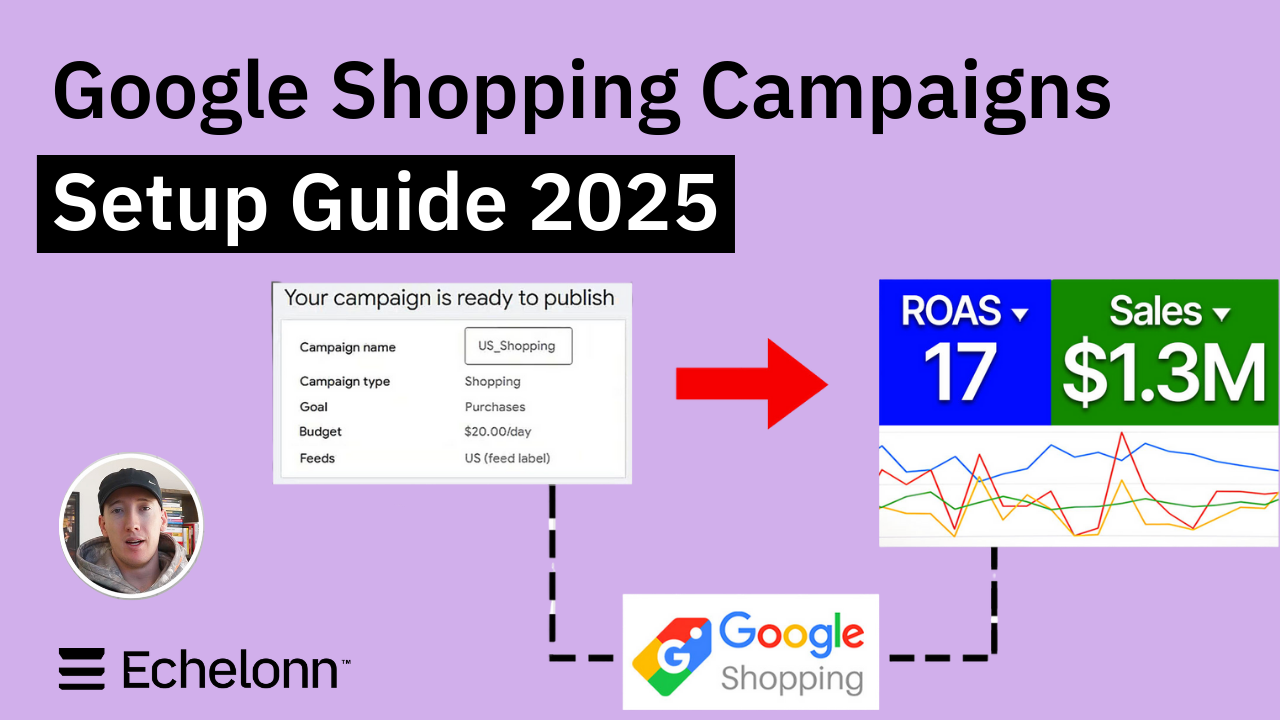
Google Shopping Campaigns Setup Guide 2025
Confessions of a Google Ads Auditor: The Worst Mistakes We See Inside eCom Accounts

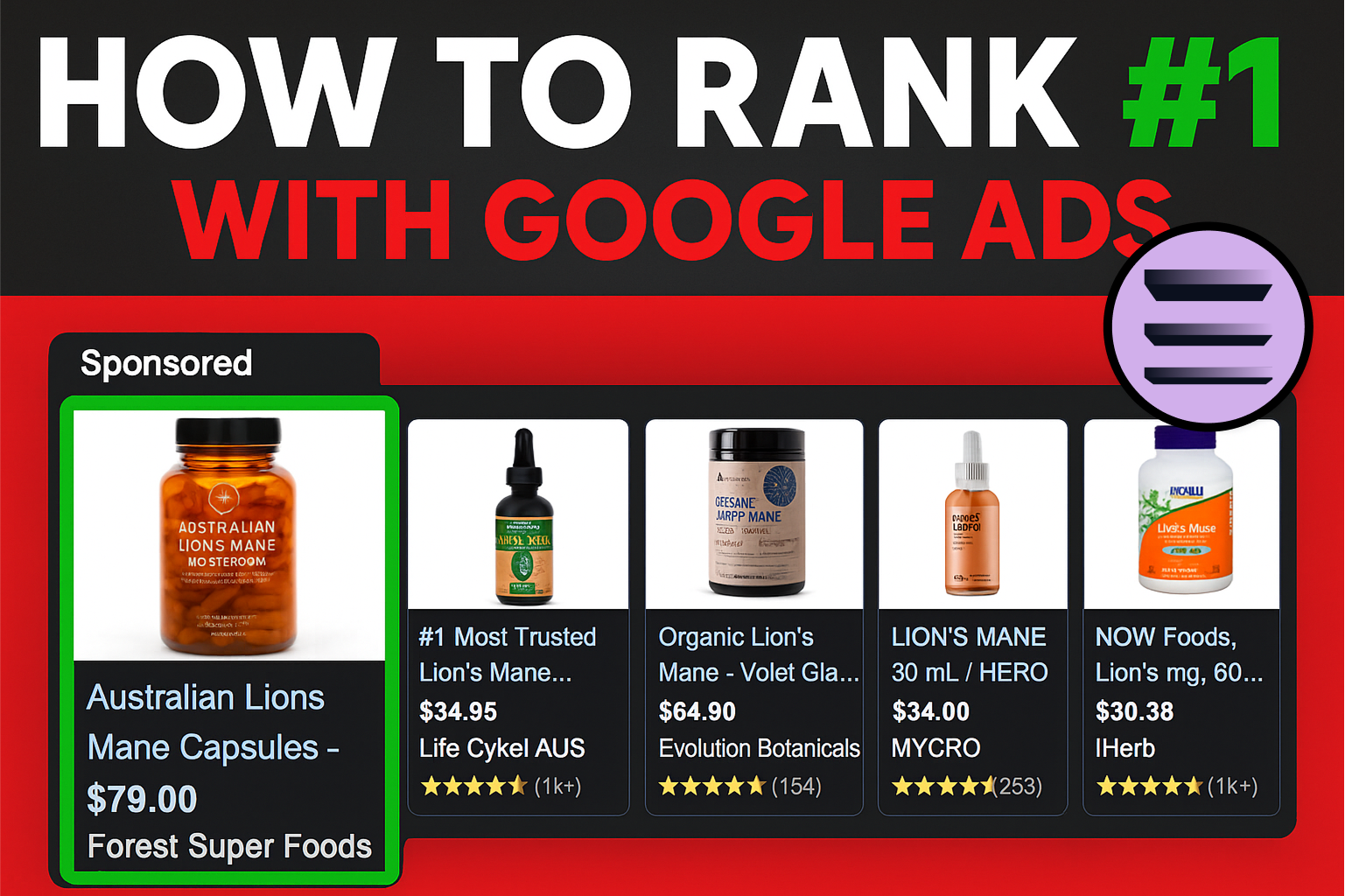
How to Rank #1 on Google Ads: Complete Shopping & Search Guide 2025
.png)
5 Google Product Feed Fixes for eCom Growth

Google Shopping Optimization: 11 Proven Tactics for Maximum ROAS
%20(3).png)
eCom Growth Strategy: How We Scaled a Supplement Brand From $1.9M to $8.6M With Google Ads
%20(4).png)
Google Merchant Center Fix: How to Improve Rankings With Accurate Shipping Times

CTR Is Misunderstood by 95% of the PPC Industry (What to Optimise for Instead)
%20(2).png)
eCom Growth Strategy With Google Ads in 2025
%20(1).png)
YouTube Advertising Strategy: How to Drive Results Across Every Format
Google Shopping Feed Optimisation: Tips for Better Results

2025 Google Shopping Ads: Ultimate Guide, Benchmarks, and Pricing Breakdown