
.svg)
6 Google Shopping Feed Best Practices That Drive Better ROAS


Most Google Shopping advice focuses on campaigns – bidding strategies, Performance Max, or account structure. The assumption is that performance is primarily driven by how campaigns are set up and optimized.
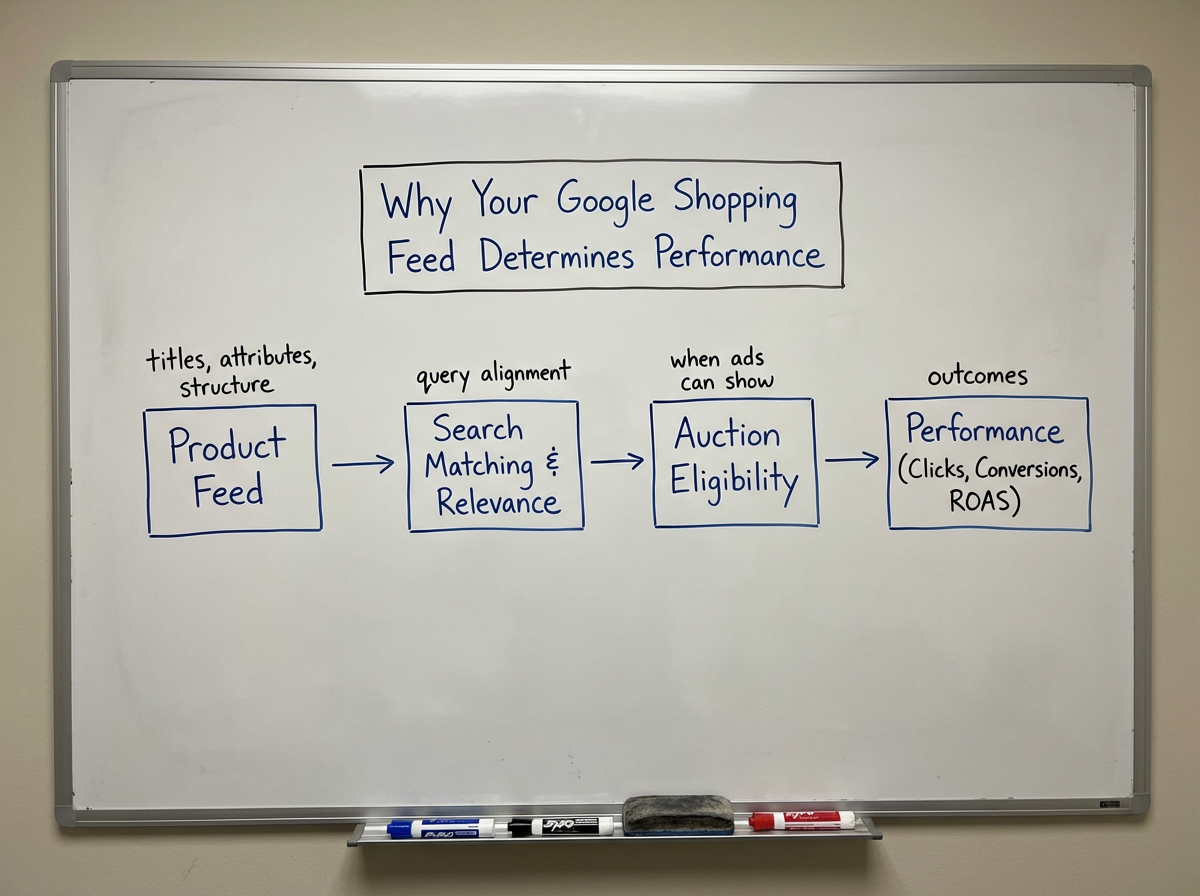
The problem is that Shopping doesn’t work that way. In reality, a large part of performance is determined before a campaign even starts. Your product feed acts as the input layer. It defines how Google interprets your products, how they match search queries, and when they become eligible to enter the auction.
Campaigns distribute demand. The feed determines whether you qualify for it in the first place. This is why many “best practices” miss the point. They focus on optimization after the fact – instead of the system that shapes performance from the start. This article focuses on the best practices that actually move performance.
Why Your Google Shopping Feed Determines Performance
Google Shopping doesn’t operate on traditional keywords. Instead, your product feed functions as the primary targeting layer. Google uses it to match search queries to products, evaluate relevance based on attributes like title, category, and product description, and determine when a product is eligible to enter the auction.
This means that targeting is largely defined by how accurately your feed describes your products. When product data is incomplete or poorly structured, Google has less context to match queries effectively, which often leads to lower relevance, more expensive traffic, and less stable performance.
Inconsistent or low-quality feed data can also weaken bidding signals, making it harder for campaigns to optimize and scale efficiently. In practice, even well-structured campaigns cannot compensate for poor input data.
Core Google Shopping Feed Best Practices That Actually Matter
1. Product Titles as the Primary Ranking Signal
Product titles are one of the strongest relevance signals in Google Shopping Ads. They directly influence which queries your products match with, how often they are shown, and how competitive they are in auctions. Many brands either keep titles too short or structure them primarily for readability rather than search relevance.
Google relies on clear attribute signals such as Google product category, brand, and key descriptors (size, color, model). When these elements are structured effectively within the title, it becomes easier for Google to match products to relevant search queries more precisely.
As a result, well-structured titles improve impression quality and help stabilize CPC by increasing relevance. Over time, more consistent query matching leads to more predictable conversion patterns, which supports more reliable Smart Bidding performance.
2. Attribute Completeness and Data Depth
For Google to accurately understand your products and match them to relevant searches, your feed needs to include more than just the minimum required information. Attributes such as product category, gender, brand, and other structured data points help Google interpret what you are selling and where it fits within search demand.
When product data lacks depth, Google has less context to match queries effectively, which can lead to lower relevance and inefficient traffic allocation. More complete and structured data improves how precisely products are matched to user intent, reducing spend on low-intent or mismatched queries. Higher-quality input data also strengthens bidding signals, making campaign optimization more consistent and performance more predictable over time.
3. Custom Labels for Profit-Based Optimization
Google Ads should always reflect business goals and strategy, and Google Shopping feeds are no exception. Custom labels allow advertisers to structure products based on business logic rather than just catalog structure, for example by margin tiers, bestsellers vs. low-performing products, or seasonal categories.
Without this layer, campaign optimization tends to treat all products equally, creating a disconnect between spend and profitability. As a result, budget may be allocated to products that generate lower margins or limited return. By segmenting products through custom labels, advertisers can make more informed budget decisions and align spend with actual business value. This improves overall ROAS and makes it easier to scale campaigns without over-investing in low-margin or underperforming products.
4. Product Images and Click Quality Signals
In Shopping, product images are often the first and most influential factor in whether a user engages with a listing. Before reading any text, users evaluate the product visually, which directly impacts the quality of clicks your campaigns generate. While CTR is not a primary business KPI like ROAS or revenue, it still plays an important role as a performance signal within Google Ads. Strong product images tend to attract more relevant clicks, improving overall engagement quality and sending clearer signals into the auction.
Over time, higher-quality engagement can improve auction efficiency, support more stable CPCs, and strengthen automated bidding performance. In this sense, image quality affects visibility, as well as the consistency and efficiency of campaign performance.
5. Pricing, Promotions, and Feed Competitiveness
Your product feed is evaluated within a competitive auction environment. Google compares your pricing, promotions, and overall offer against other advertisers targeting the same queries. Even a well-structured feed can underperform if the offer itself is not competitive.
This is where feed optimization connects directly to business strategy. Pricing and promotional competitiveness influence not only conversion rates but also how your products perform within the auction. This includes structured elements like Merchant Promotions, which influence how competitive your offer appears in the auction.
Stronger conversion performance sends clearer signals into bidding systems, improving efficiency and stability over time. As a result, consistent conversion data supports more reliable bidding decisions and makes performance easier to forecast and scale.
“In Google Shopping, performance plateaus are rarely a campaign problem. More often, they’re a signal that the product feed is no longer competitive.”
Advanced Best Practice: Turn Your Feed Into a Testing System
Why You Should Never “Set and Forget” Your Feed
Many brands treat feed optimization as a one-time task: update titles, clean up attributes, and consider the work done. The reality is that Google Shopping operates in a constantly evolving environment. Search behavior changes, competitors refine their feeds, and pricing dynamics shift over time.
A static feed cannot adapt to these changes. As a result, performance often plateaus or gradually declines. This is usually not because campaigns are poorly managed, but because the inputs are no longer competitive. Over time, this reduces matching efficiency, limits how effectively campaigns can be optimized, and makes it harder to maintain consistent results.
Feed Testing Framework (Simple Version)
The difference between incremental improvements and strong performance often comes down to how systematically you test your feed variations. This typically includes testing different title structures (attribute order, keyword inclusion), product images, the completeness of product attributes (e.g. adding missing brand, gender, or product category data), and segmentation through custom labels.
Instead of testing everything at once, it’s more effective to introduce controlled variations that allow for clear comparison. This approach makes it possible to improve performance based on data without disrupting existing results. Over time, consistent testing strengthens the quality of input data, which improves bidding stability and supports more predictable scaling.
The following breakdown shows a practical framework for testing product titles, images, and feed structures without disrupting existing performance.
How Long to Run Feed Tests
Even controlled feed changes can affect multiple layers of performance, including query matching, auction participation, and conversion behavior. Because of this, results are rarely immediate. The system needs time to process new signals, stabilize performance, and generate sufficient data.
Most feed tests should run for at least 2–4 weeks to produce meaningful insights. For accounts with lower volume, longer testing periods of 4–6 weeks may be necessary to reach statistical significance. The required duration also depends on traffic volume, conversion frequency, and how significant the feed changes are.
Short testing windows often lead to misleading conclusions, as early performance fluctuations do not reflect long-term trends. Allowing enough time for data to stabilize reduces the risk of incorrect optimization decisions. More reliable testing decisions compound over time, leading to more stable and predictable account performance.
Final Takeaway: Google Shopping Feed as a Performance Engine
Your product feed defines how well your products are understood, how accurately they match search demand, and how consistently they perform over time. This is why Google Shopping should not be optimized only at the campaign level.
Without a clear structure, sufficient data depth, and continuous testing, campaigns are forced to compensate for weak inputs. This typically results in higher costs, less stable results, and limited scalability. A well-structured and actively tested feed creates a strong foundation for optimization. It improves how signals enter the system and makes outcomes more predictable over time.
The key takeaway is simple: control the structure, test continuously, and let campaigns distribute your inputs – not compensate for them.

Ready To Start Scaling Today?
Scaling Your Favorite eCommerce Brands To The Highest Levels Through Google & YouTube Ads.

.svg)
Get Smarter About How To Scale Your Brand...
Discover Insider Knowledge On How We Scale Brands From 7 Figures All The Way Up To 8-9 Figures With Google Ads.
.svg)
.svg)
"The best Google ads agency there is. You only need to look at the quality of clients and the reviews to understand Jackson and his team are the real deal."

"One of the best in the agency space, great service and exceptional results. Since signing on with Jackson he has become one of our greatest assets when scaling."

"Top tier team & service delivery. Jackson is relentless when it comes to fulfilment & client needs. His attention to detail during the onboarding process ensured exponential results for my coaching business. If you're looking to elevate your ad results & learn a tone of new options/skills that can be implemented to drive more sales to your business then I'd strongly recommend Echelonn."

"From the very first conversation with Jackson and his team, it was clear that we had found a Google Ads agency that prioritises results above all else. Their collaboration between data-driven experts and a skilled copywriter creates a dynamic duo for Google advertising success..."

"Been working with them for 9 months and it's been a great experience. Jackson and his team know what they are doing and always goes above and beyond. If you're looking for a reliable Google ads agency this is the one."

"The best Google ads agency there is. You only need to look at the quality of clients and the reviews to understand Jackson and his team are the real deal."
"One of the best in the agency space, great service and exceptional results. Since signing on with Jackson he has become one of our greatest assets when scaling."
"Top tier team & service delivery. Jackson is relentless when it comes to fulfilment & client needs. His attention to detail during the onboarding process ensured exponential results for my coaching business. If you're looking to elevate your ad results & learn a tone of new options/skills that can be implemented to drive more sales to your business then I'd strongly recommend Echelonn."
"From the very first conversation with Jackson and his team, it was clear that we had found a Google Ads agency that prioritises results above all else. Their collaboration between data-driven experts and a skilled copywriter creates a dynamic duo for Google advertising success..."
"Been working with them for 9 months and it's been a great experience. Jackson and his team know what they are doing and always goes above and beyond. If you're looking for a reliable Google ads agency this is the one."
More Articles Like This.
Find answers to common queries about our services and how we can help you.
.svg)
Google Ads Optimization Score: Should You Trust It?
What Is a Good CTR for Google Ads?
Why More Google Ads Spend Doesn't Always Mean More Revenue
How To Rank Your Google Shopping Ads Multiple Times
Why Your Google Ads Scale Breaks After $X Per Day
How to Tell if Your Google Ads Agency Is Underperforming
Why Your Performance Max Campaign Gets Clicks but No Sales
.png)
Why Your Google Ads Budget Isn't Spending (And How to Fix It)

The Right Way to Run Google Dynamic Search Ads
How to Get New Customers With Google Ads in 2026
Why Your Google Ads CPA Keeps Increasing and How to Reduce It
What Is a Good ROAS for eCommerce Businesses?
How to Set Up Google Ads Conversion Tracking the Right Way
How Much Does a Google Ads Agency Cost?
Why Your Google Ads Are Not Converting
.png)
Average CPC in Google Ads by Industry (And What It Means for Your Strategy)
Performance Max vs. Shopping Campaigns: Which One is Better?

Why Your Google Shopping Ads Get Impressions But No Clicks (Image Optimization Guide)
Why Your Google Ads Are Not Showing

YouTube Ads Targeting Framework That's Driven $10M+ for eCommerce Brands

What Professional Google Shopping Ads Management Looks Like
How Much Do Google Ads Cost in 2026?

Should Your Business Use Google Search Ads or Performance Max?

Performance Max Best Practices for Sustainable Growth
.png)
Google Shopping Ads Audience Targeting: What Actually Impacts Performance
.png)
How to Write Google Search Ads That Actually Convert
.png)
6 Google Shopping Feed Best Practices That Drive Better ROAS
%20(1).png)
How to Get Your Products Recommended by AI (ChatGPT, Google AI & More)
.png)
Common Google Ads Myths That Cost Businesses Money
.png)
7 Benefits of Google Shopping Ads for Your eCommerce Business
.png)
How to Switch Google Ads Agency Without Losing Performance or Data
.png)
Demand Capture vs Demand Generation: Where Google Ads Fits
.png)
How to Prepare Your Business for Working With a Google Ads Agency

How to Avoid Wasting Budget on the Wrong Searches With Google Ads Keyword Match Types
Google Ads Account Ownership: What Businesses Should Know Before Hiring an Agency
.png)
Landing Page Optimization Strategies That Increase Conversions
SEO and Google Ads: How Search Engine Optimization and Paid Search Work Together
Types of Remarketing in Google Ads: How Each One Works and When to Use It
Google Ads Keyword Research: How to Find Keywords That Actually Convert
.png)
What Is Google Performance Max and How Does It Work?
.png)
How Advertorials Support High-Intent Google Ads Funnels
%20(Canva%20Template).png)
How Audience Targeting Works in Google Search Ads (and When to Use It)

Google Ads for New Brands: What to Know Before Spending Your First Dollar
.png)
What Is a PPC Agency – and When It Makes Sense to Hire One
.png)
How to Improve Your Google Ads Conversion Rate

.png)
The Right Way to Link Shopify and Google Ads for Scalable Growth
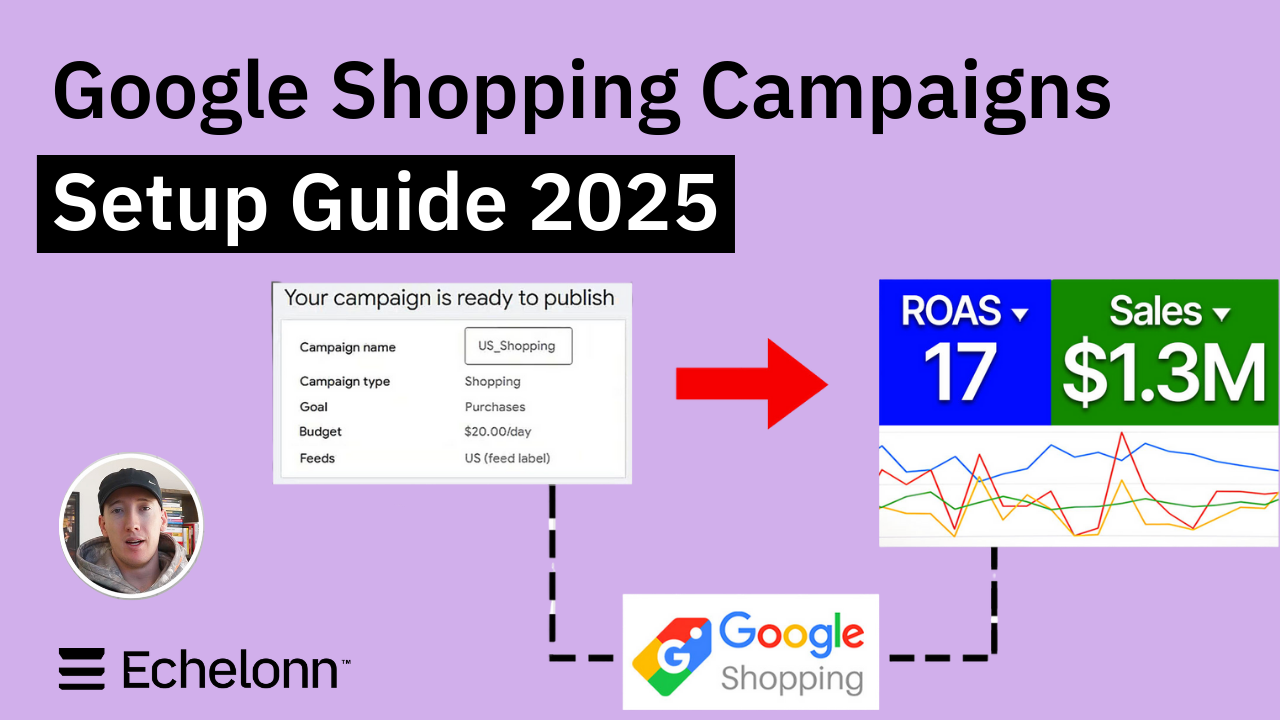
Google Shopping Campaigns Setup Guide 2025
Confessions of a Google Ads Auditor: The Worst Mistakes We See Inside eCom Accounts

How to Spy on Competitor Google Ads: Complete 2025 Guide
%20(2).png)
7 Questions to Ask Before Hiring a Google Ads Consultant
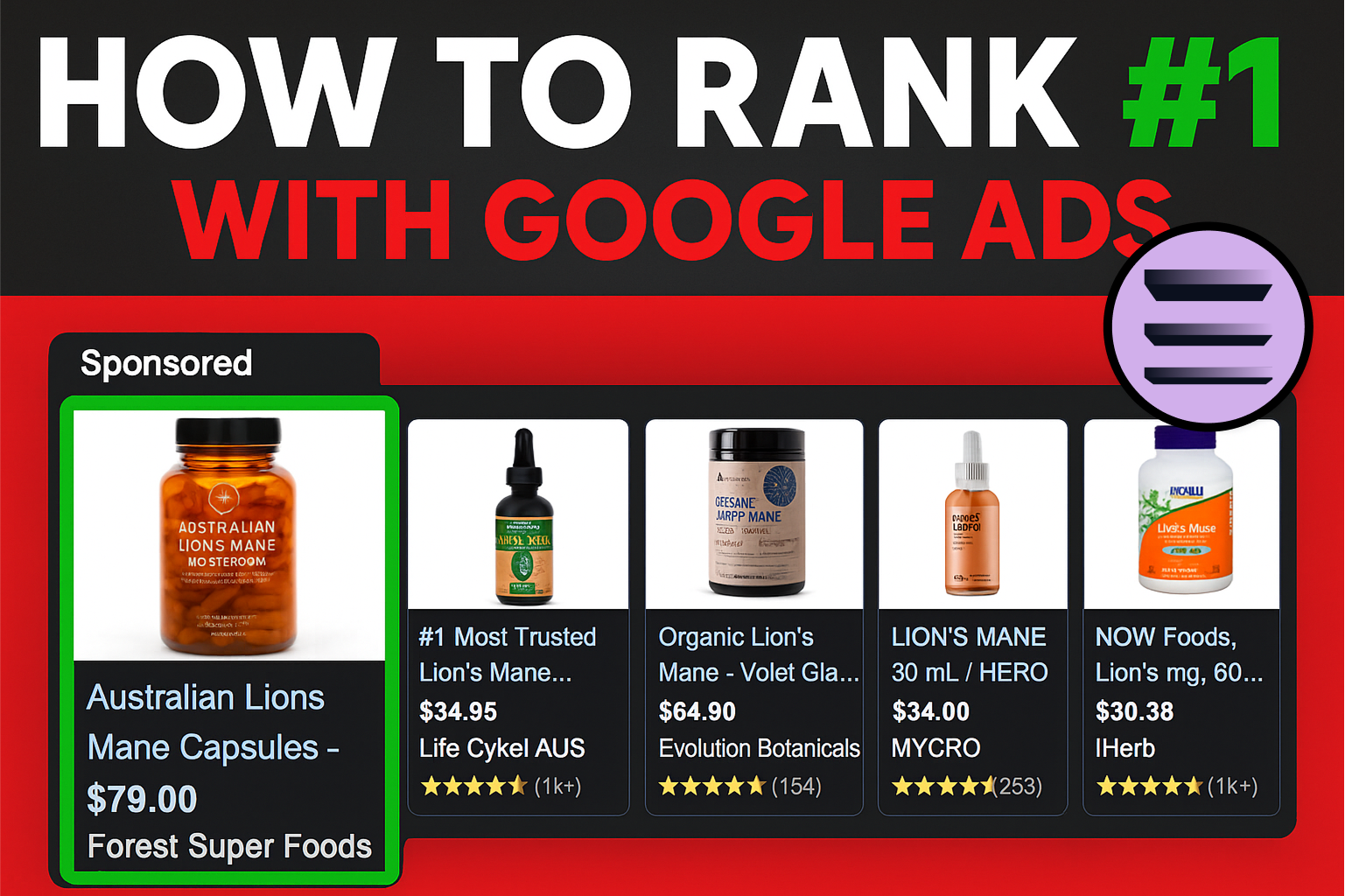
How to Rank #1 on Google Ads: Complete Shopping & Search Guide 2025
.png)
Learning Google Ads in 2025: The Roadmap Nobody Talks About
%20(1).png)
What Makes a Google Ads Specialist Worth $10,000/Month?

Why Cheap Google Ads Consulting Costs You $180,000+ in Lost Revenue
.png)
Why 99% of Google Ads Experts Fail (& How to Find One That Won’t)
.png)
5 Google Product Feed Fixes for eCom Growth
.png)
Google Ads Campaign Structure: Why 95% of Brands Waste Budget on Mixed Traffic

In-House vs Agency Google Ads: Which Delivers Better ROI in 2025?
.png)
How to Scale Google Ads With a Small Budget | Setup and Optimization

Google Shopping Optimization: 11 Proven Tactics for Maximum ROAS
%20(3).png)
eCom Growth Strategy: How We Scaled a Supplement Brand From $1.9M to $8.6M With Google Ads
%20(4).png)
Google Merchant Center Fix: How to Improve Rankings With Accurate Shipping Times

CTR Is Misunderstood by 95% of the PPC Industry (What to Optimise for Instead)
.png)
Google Ads AI | Manual vs Automated Campaign Performance

Complete YouTube Ads Guide 2025 | 3 Formats, 5 Principles, Proven Results
%20(2).png)
eCom Growth Strategy With Google Ads in 2025
.png)
Google Marketing Live 2025: 11 Key Takeaways for Marketers
%20(1).png)
YouTube Advertising Strategy: How to Drive Results Across Every Format
Google Shopping Feed Optimisation: Tips for Better Results

How Long Does it Take for Google Ads to Work?

Search Ad Strategies to Maximize Sales with Google ads for eCommerce (2024)

2025 Google Shopping Ads: Ultimate Guide, Benchmarks, and Pricing Breakdown

Maximizing ROI with Advanced Google Shopping Bid Strategies and Automated Bidding