
.svg)
Should Your Business Use Google Search Ads or Performance Max?


Most eCommerce accounts don’t have a Search Ads or Performance Max problem. The real issue is a messy account structure. Search Ads and PMax work in different ways. They use different signals and target different types of intent, so they shouldn’t be treated the same.
In our Google Ads audits, we constantly see Search and PMax fighting over the same customers. This creates messy data, unstable bidding, and confusion about what is actually driving results. It also makes it harder to scale with confidence. The question isn’t whether to use Search Ads or Performance Max, but how to make them work together without stealing each other’s credit.
Search Ads vs Performance Max: The Main Difference
Both Search Ads and PMax have the same goal: driving conversions. While that’s true, it can also be misleading. They operate differently and optimise using different signals. When this distinction is unclear, they can end up competing within the same account and wasting budget.
Search Ads: Explicit Demand
Search Ads are built around keywords. A user types something in, and Google matches it to your keywords. This creates a sense of control – that keywords and match types are the main things driving performance.
But the control is limited. Modern Search doesn’t just optimise for keywords, but it also considers user behaviour and past performance. If your account is disorganised, Google doesn’t know what to optimise for. Instead of steady growth, you may see rising CPCs and unstable results.
This becomes even more obvious when the landing page or offer doesn’t match what the user expected after clicking the ad. Search is a reactive tool. It captures users who are already looking for what you offer. It works best when your keywords, ads, and landing pages are clearly aligned.
Performance Max: The Proactive Layer
Performance Max doesn't wait for a search. It goes out and finds your next customer based on how people behave online. It collects signals across Google – from browsing to video views – to find users who are similar to your customers, even if they’re not searching yet. While PMax can also advertise on Search and Shopping, it optimises differently. It doesn’t rely on keywords, but uses patterns in data.
A common mistake is treating PMax like a campaign that will “just work” without clear direction. Because it relies on data, it needs enough of it to perform well. When used correctly, PMax is a strong scaling tool. It can bring in conversions that keyword targeting alone would miss.
PMax often looks strong early on because it captures the easiest conversions. But as you scale, it becomes harder to control. Its performance depends heavily on the quality of your inputs, like your product feed and creatives. Instead of tweaking settings, your job is to give it better inputs and clear boundaries. This helps PMax bring in new results, instead of just taking credit for conversions that Search would have captured anyway.
“Search and Performance Max work with different types of intent and data. When they start overlapping without clear boundaries, things get messy. It becomes harder to see what is actually working and where your results are coming from. What looks like growth is often just the same conversions being counted in a different way.”
When Search and PMax Collide: Overlap and Cannibalisation
If Search and PMax start to overlap and compete, performance doesn't grow. It just gets split between them. We see this often in eCommerce accounts. Both campaign types end up going after the same search terms instead of working together. The result is duplicated signals, inflated reporting, and unstable budget allocation. It may look like you’re scaling, but in reality, you’re just paying twice to reach the same user.
How Google Prioritises Campaigns
Google Ads doesn’t treat all campaigns the same. When more campaigns can show for the same search, it decides which one gets priority.
In many cases:
- Search campaigns can take priority over Performance Max when both target the same query.
- Exact match keywords usually have the highest priority among all.
If two campaigns go after the same search, only one wins. For example, someone searches for your brand name. Both Search and PMax can show, but only one will get the click, and the credit.
Why Your Search Traffic is Disappearing into PMax
Performance Max has access to Search inventory, which changes how demand is captured. It can step in and take the click instead of your Search campaigns. This changes the data – Search shows fewer impressions and clicks, while PMax claims the conversions.
But the demand hasn’t changed. Your Search campaigns are still working. The results are just being credited to PMax.
Protecting Your Brand Keywords
PMax often prioritises brand keywords because they are easy conversions. This can make performance look better than it really is. The account appears more efficient, but no new demand is being created. In branded Search campaigns, performance is typically much stronger than in non-brand. It’s not unusual to see ROAS in the range of 10-20x or higher, since you’re capturing existing demand.
That’s why it’s important to separate brand and non-brand traffic. Without this split, it’s hard to tell whether you’re bringing in new customers or just capturing people who already know your brand.
Make sure your account structure is clean and each campaign has a clear role. Put clear boundaries in place to avoid overlap. When we restructured accounts this way, we’ve seen brands cut their CPA by 49% – all without increasing their budgets.
The Real Failure Point: Poor Campaign Boundaries
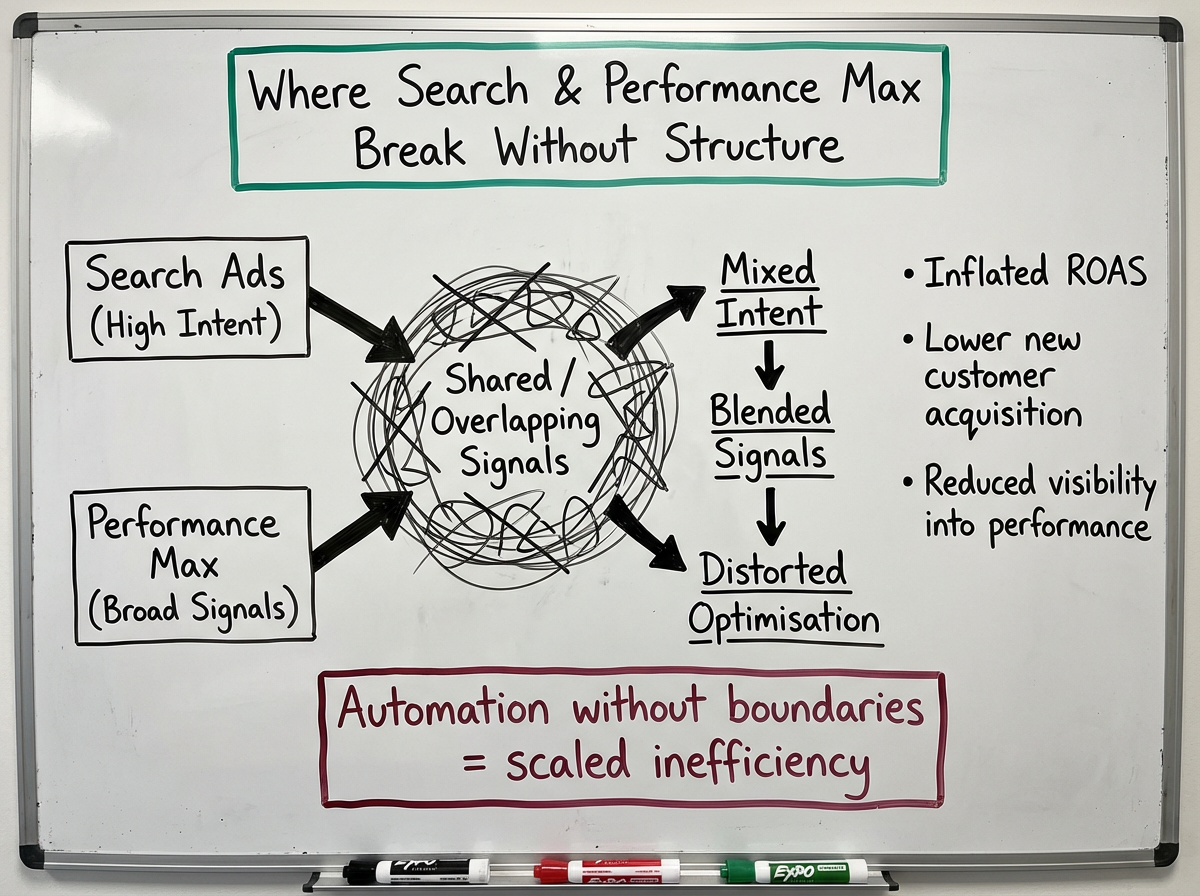
Most performance issues in eCommerce accounts come down to poor campaign boundaries. When Search and Performance Max don’t have clear roles, intent gets mixed. High-intent searches and discovery traffic end up in the same place, which makes it harder for Google to optimise properly.
So, if you don’t set clear boundaries, Google’s automation will take the easiest path. But the easiest conversions aren’t always the most valuable. The system starts prioritising branded traffic or returning users, while real growth opportunities get ignored.
Over time, this leads to:
- Inflated ROAS – Results look strong, but actual profit doesn't grow.
- Declining New Customer Acquisition – The system stops reaching new audiences.
- Less Clarity – It becomes harder to see what is actually driving performance.
Relying on a single PMax campaign to do everything might feel simple, but it comes at a cost. You lose control. Signals get mixed, optimisation loses direction, and the system runs without a clear goal.
Using Both Search Ads And PMax: A Framework for Role-Based Design
The difference between Search Ads and Performance Max isn’t something you fix inside one campaign. It comes from how you structure the whole account. When each campaign has a clear role, everything becomes easier to manage. Data is cleaner, bidding is more stable, and it’s easier to decide where to scale.
Search is your precision layer. It captures high-intent searches and gives you clear signals. Performance Max is your scaling layer. It goes beyond Search and helps you find additional conversions.
When these roles are clearly separated, they support each other instead of competing:
Search defines intent. PMax expands it. This makes performance easier to understand and more predictable.
You can (and should) use both Search Ads and PMax, but only if their roles are clear. Control comes from setting boundaries. Without them, the system starts optimising in the wrong direction.
Final Verdict: Stop Choosing Between Search and PMax. Use Them Together
If you are deciding between Search Ads and Performance Max, you’re asking the wrong question. The real question is how to use them together. Search captures existing demand. PMax helps you extend beyond it. When their roles aren’t clear, both campaigns start going after the same conversions. This makes performance harder to understand and to trust.
The goal isn’t to pick the “better” option. It’s to build a structure where each campaign has a clear role and clean data. That’s how you drive real growth, not just shift the same results from one campaign to another.

Ready To Start Scaling Today?
Scaling Your Favorite eCommerce Brands To The Highest Levels Through Google & YouTube Ads.

.svg)
Get Smarter About How To Scale Your Brand...
Discover Insider Knowledge On How We Scale Brands From 7 Figures All The Way Up To 8-9 Figures With Google Ads.
.svg)
.svg)
"The best Google ads agency there is. You only need to look at the quality of clients and the reviews to understand Jackson and his team are the real deal."

"One of the best in the agency space, great service and exceptional results. Since signing on with Jackson he has become one of our greatest assets when scaling."

"Top tier team & service delivery. Jackson is relentless when it comes to fulfilment & client needs. His attention to detail during the onboarding process ensured exponential results for my coaching business. If you're looking to elevate your ad results & learn a tone of new options/skills that can be implemented to drive more sales to your business then I'd strongly recommend Echelonn."

"From the very first conversation with Jackson and his team, it was clear that we had found a Google Ads agency that prioritises results above all else. Their collaboration between data-driven experts and a skilled copywriter creates a dynamic duo for Google advertising success..."

"Been working with them for 9 months and it's been a great experience. Jackson and his team know what they are doing and always goes above and beyond. If you're looking for a reliable Google ads agency this is the one."

"The best Google ads agency there is. You only need to look at the quality of clients and the reviews to understand Jackson and his team are the real deal."
"One of the best in the agency space, great service and exceptional results. Since signing on with Jackson he has become one of our greatest assets when scaling."
"Top tier team & service delivery. Jackson is relentless when it comes to fulfilment & client needs. His attention to detail during the onboarding process ensured exponential results for my coaching business. If you're looking to elevate your ad results & learn a tone of new options/skills that can be implemented to drive more sales to your business then I'd strongly recommend Echelonn."
"From the very first conversation with Jackson and his team, it was clear that we had found a Google Ads agency that prioritises results above all else. Their collaboration between data-driven experts and a skilled copywriter creates a dynamic duo for Google advertising success..."
"Been working with them for 9 months and it's been a great experience. Jackson and his team know what they are doing and always goes above and beyond. If you're looking for a reliable Google ads agency this is the one."
More Articles Like This.
Find answers to common queries about our services and how we can help you.
.svg)
How To Rank Your Google Shopping Ads Multiple Times
Why Your Google Ads Scale Breaks After $X Per Day
How to Tell if Your Google Ads Agency Is Underperforming
Why Your Performance Max Campaign Gets Clicks but No Sales
.png)
Why Your Google Ads Budget Isn't Spending (And How to Fix It)

The Right Way to Run Google Dynamic Search Ads
How to Get New Customers With Google Ads in 2026
Why Your Google Ads CPA Keeps Increasing and How to Reduce It
What Is a Good ROAS for eCommerce Businesses?
How to Set Up Google Ads Conversion Tracking the Right Way
How Much Does a Google Ads Agency Cost?
Why Your Google Ads Are Not Converting
.png)
Average CPC in Google Ads by Industry (And What It Means for Your Strategy)
Performance Max vs. Shopping Campaigns: Which One is Better?

Why Your Google Shopping Ads Get Impressions But No Clicks (Image Optimization Guide)
Why Your Google Ads Are Not Showing

YouTube Ads Targeting Framework That's Driven $10M+ for eCommerce Brands

What Professional Google Shopping Ads Management Looks Like
How Much Do Google Ads Cost in 2026?

Should Your Business Use Google Search Ads or Performance Max?

Performance Max Best Practices for Sustainable Growth
.png)
Google Shopping Ads Audience Targeting: What Actually Impacts Performance
.png)
How to Write Google Search Ads That Actually Convert
.png)
6 Google Shopping Feed Best Practices That Drive Better ROAS
%20(1).png)
How to Get Your Products Recommended by AI (ChatGPT, Google AI & More)
.png)
Common Google Ads Myths That Cost Businesses Money
.png)
7 Benefits of Google Shopping Ads for Your eCommerce Business
.png)
How to Switch Google Ads Agency Without Losing Performance or Data
.png)
Demand Capture vs Demand Generation: Where Google Ads Fits
.png)
How to Prepare Your Business for Working With a Google Ads Agency

How to Avoid Wasting Budget on the Wrong Searches With Google Ads Keyword Match Types
Google Ads Account Ownership: What Businesses Should Know Before Hiring an Agency
.png)
Landing Page Optimization Strategies That Increase Conversions
SEO and Google Ads: How Search Engine Optimization and Paid Search Work Together
Types of Remarketing in Google Ads: How Each One Works and When to Use It
Google Ads Keyword Research: How to Find Keywords That Actually Convert
.png)
What Is Google Performance Max and How Does It Work?
.png)
How Advertorials Support High-Intent Google Ads Funnels
%20(Canva%20Template).png)
How Audience Targeting Works in Google Search Ads (and When to Use It)

Google Ads for New Brands: What to Know Before Spending Your First Dollar
.png)
What Is a PPC Agency – and When It Makes Sense to Hire One
.png)
How to Improve Your Google Ads Conversion Rate

.png)
The Right Way to Link Shopify and Google Ads for Scalable Growth
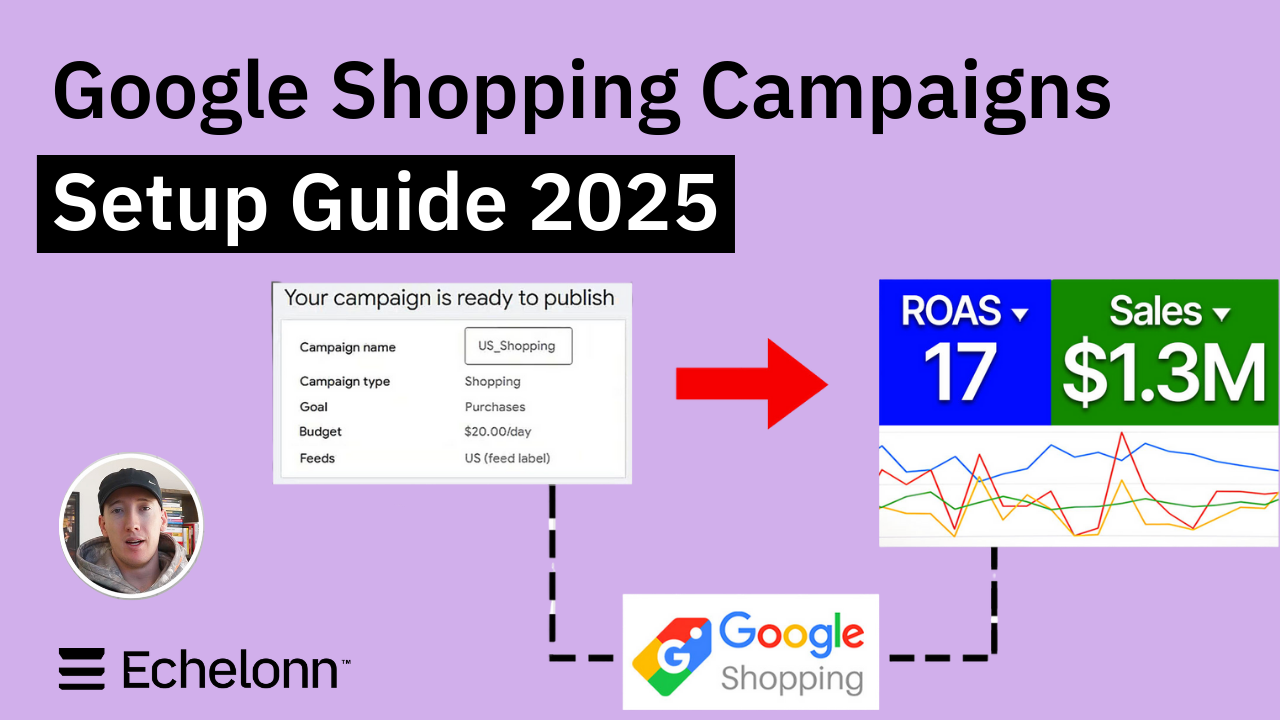
Google Shopping Campaigns Setup Guide 2025
Confessions of a Google Ads Auditor: The Worst Mistakes We See Inside eCom Accounts
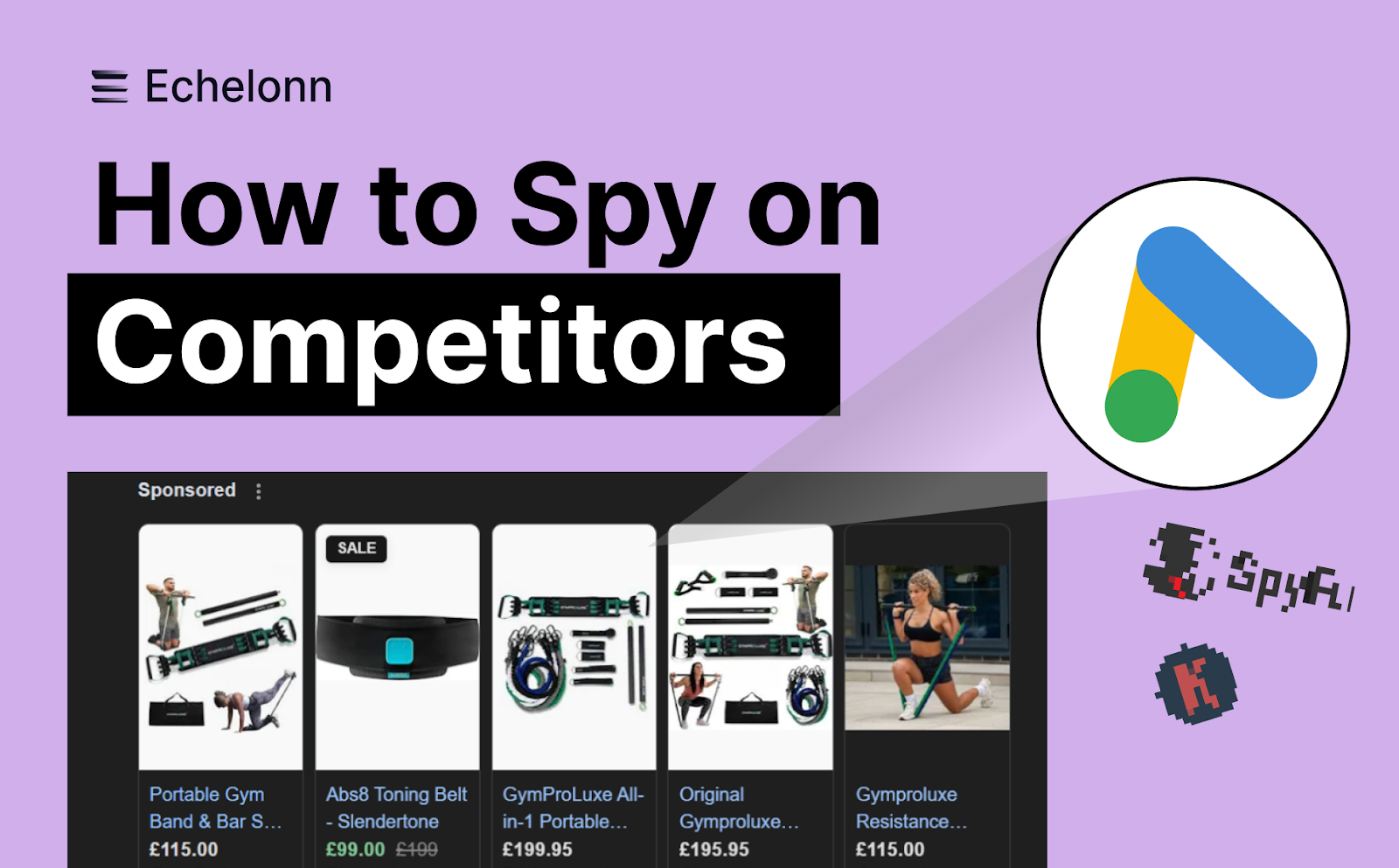
How to Spy on Competitor Google Ads: Complete 2025 Guide
%20(2).png)
7 Questions to Ask Before Hiring a Google Ads Consultant
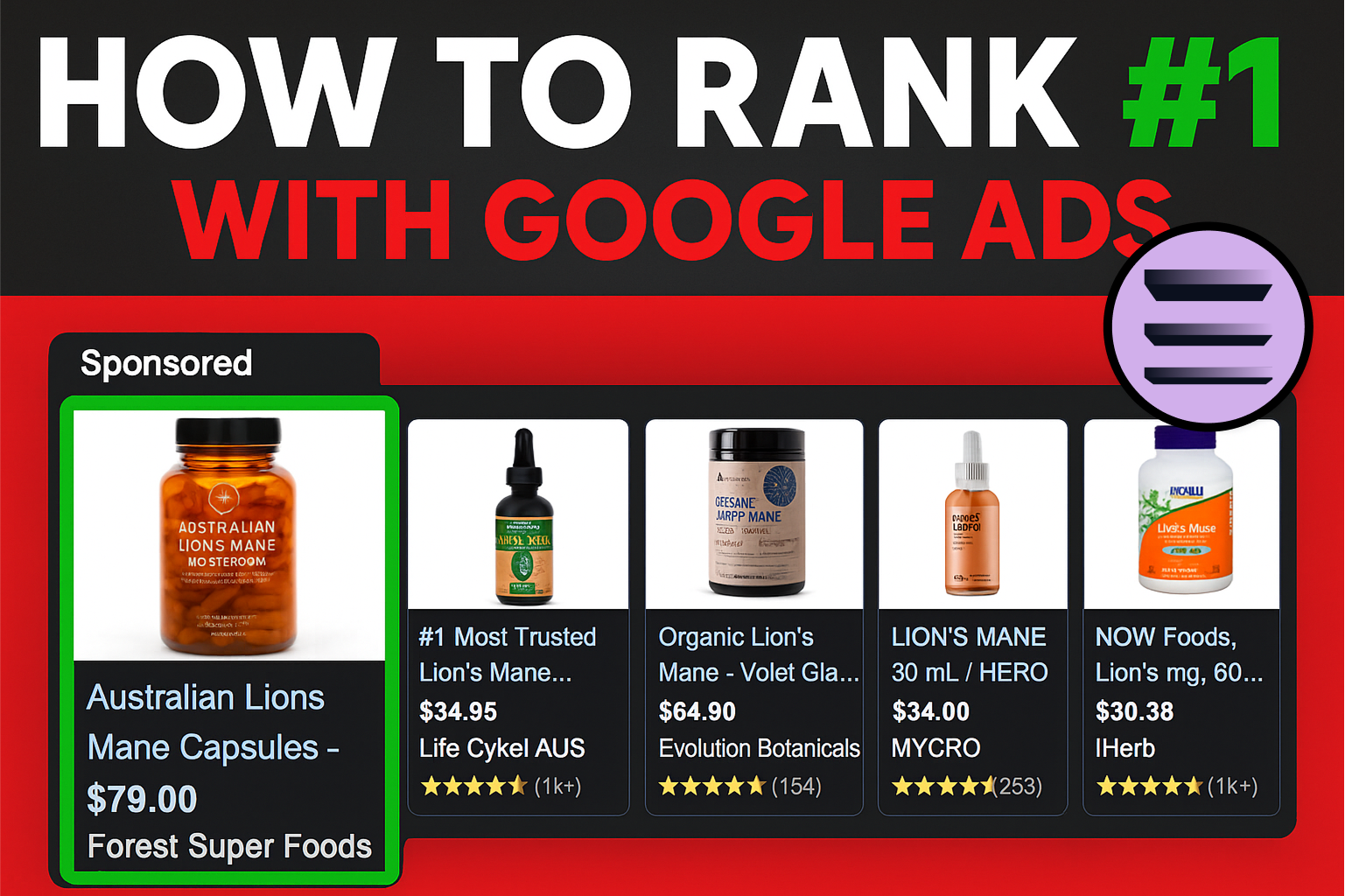
How to Rank #1 on Google Ads: Complete Shopping & Search Guide 2025
.png)
Learning Google Ads in 2025: The Roadmap Nobody Talks About
%20(1).png)
What Makes a Google Ads Specialist Worth $10,000/Month?

Why Cheap Google Ads Consulting Costs You $180,000+ in Lost Revenue
.png)
Why 99% of Google Ads Experts Fail (& How to Find One That Won’t)
.png)
5 Google Product Feed Fixes for eCom Growth
.png)
Google Ads Campaign Structure: Why 95% of Brands Waste Budget on Mixed Traffic

In-House vs Agency Google Ads: Which Delivers Better ROI in 2025?
.png)
How to Scale Google Ads With a Small Budget | Setup and Optimization

Google Shopping Optimization: 11 Proven Tactics for Maximum ROAS
%20(3).png)
eCom Growth Strategy: How We Scaled a Supplement Brand From $1.9M to $8.6M With Google Ads
%20(4).png)
Google Merchant Center Fix: How to Improve Rankings With Accurate Shipping Times

CTR Is Misunderstood by 95% of the PPC Industry (What to Optimise for Instead)
.png)
Google Ads AI | Manual vs Automated Campaign Performance

Complete YouTube Ads Guide 2025 | 3 Formats, 5 Principles, Proven Results
%20(2).png)
eCom Growth Strategy With Google Ads in 2025
.png)
Google Marketing Live 2025: 11 Key Takeaways for Marketers
%20(1).png)
YouTube Advertising Strategy: How to Drive Results Across Every Format
Google Shopping Feed Optimisation: Tips for Better Results

How Long Does it Take for Google Ads to Work?

Search Ad Strategies to Maximize Sales with Google ads for eCommerce (2024)

2025 Google Shopping Ads: Ultimate Guide, Benchmarks, and Pricing Breakdown

Maximizing ROI with Advanced Google Shopping Bid Strategies and Automated Bidding