
.svg)
How to Prepare Your Business for Working With a Google Ads Agency


.png)
Many businesses prioritize choosing the right agency instead of preparing internally. Yet campaign performance doesn’t start with optimization, but rather with input quality.
For companies evaluating a Google Ads agency or a broader PPC agency, it’s important to understand that execution amplifies existing structure. If conversion tracking, intent signals, access to existing audience segments (such as GA4 or Klaviyo), and account access are unstable, even the strongest external team will need more time to stabilize performance. The quality of your internal preparation directly shapes bidding stability, learning speed, and confidence in budget and strategic decisions. Whether you’re already running campaigns or preparing to launch your first structured Google Ads strategy, preparation is where performance begins.
Step 1: Clarify Business Objectives and Constraints
Before partnering with a Google Ads agency, clarify what success means for your business. Campaign performance cannot be evaluated in isolation from financial and operational expectations. Before defining performance targets, businesses need a clear understanding of their unit economics. Gross margins, contribution margins, and breakeven ROAS thresholds should shape expectations from the outset.
Relying solely on past performance data can be misleading – especially if branded traffic was mixed into prospecting campaigns, conversion tracking was inaccurate, or repeat purchase rates inflated reported results. Without separating these variables, KPI targets risk being either overly restrictive, limiting scalability, or unrealistically aggressive, creating unprofitable growth from the start.
Google Ads optimization responds to defined targets. If those goals are unrealistic, inconsistent, or unclear, bidding strategies adapt to unstable signals. That instability often appears as performance volatility, while in reality, the root cause is strategic ambiguity. Clear objectives determine how budgets are allocated, how performance targets are set, and how scaling decisions are evaluated. Without this alignment, optimization becomes more reactive rather than structured.
Profitability vs Growth Priority
One of the most important distinctions to clarify before partnering with an agency is whether your current priority is profitability or growth. Both are valid, but the risk lies in mixing them without defining the trade-offs.
A growth strategy might tolerate lower short-term ROAS, higher customer acquisition costs, and increased volatility during expansion. A profitability strategy typically requires strict margin protection, stable CPA or ROAS thresholds, and controlled budget pacing. These priorities need to be defined and discussed. Otherwise, an agency may push for expansion to capture demand, while internal stakeholders expect immediate efficiency improvements. The result is tension – not because the campaigns are failing, but because the strategic objective was never clearly defined.
Step 2: Secure Asset Ownership and Access Structure
Before partnering with an agency, clarify and secure your Google Ads account ownership and other core advertising assets. Management can be delegated, but ownership should remain with the business. If the account, billing profile, or connected assets are owned by the agency, your ability to control, migrate, or scale future efforts becomes restricted. Clear ownership protects historical data, preserves accumulated learning, and reduces risk during transition – these are all strategic considerations that directly influence bidding stability and long-term performance continuity.
Overly restrictive access slows down execution, while overly open access increases operational risk. A clear access structure enables efficient agency execution while preserving strategic control.
Step 3: Stabilize Your Data and Tracking Infrastructure
Before an agency can optimize performance, it has to rely on stable and trustworthy signals. Modern Google Ads automation systems are built to react directly to the quality and consistency of these signals. Smart Bidding relies on historical data and responds to observable conversion behavior. If tracking is inaccurate, delayed, or inconsistent, algorithmic learning becomes slower and less predictable. Data infrastructure defines the quality of the signals your campaigns optimize against.
Conversion Tracking Accuracy
Accurate conversion tracking should be the foundation. Every primary business action – purchase, qualified lead, booked consultation, or other core conversion events – has to be measured correctly and consistently. Multiple primary conversion actions, conflicting account-default goals, missing values, incorrect attribution windows, or inconsistent tagging create distorted performance signals. Bidding systems cannot distinguish between real performance shifts and tracking errors.
Even small inaccuracies compound over time, causing the algorithm to optimize toward the wrong outcomes. Clean conversion tracking improves optimization speed and reduces unnecessary performance volatility.
Attribution Consistency
Attribution determines which interaction receives credit for a conversion. Attribution settings should reflect how your business evaluates revenue impact. If internal reporting relies on one attribution model while Google Ads optimizes towards another, performance discussions quickly become misaligned. This doesn’t mean one model is universally correct, but consistency across systems is critical.
Attribution changes during active scaling can also create artificial performance shifts, making trends harder to interpret. Consistent attribution improves reporting clarity and stabilizes performance evaluation.
Data Delays and Signal Instability
Conversion delays – such as long sales cycles or delayed confirmation of actual revenue value – can temporarily distort campaign performance. Without understanding these delays, early fluctuations may be misinterpreted as underperformance. When value signals or confirmed revenue are imported into Google Ads with delay, automated bidding temporarily optimizes against incomplete performance data.
Clarifying expected conversion delays before scaling reduces unnecessary reactive changes. Understanding signal timing improves forecasting stability and reduces premature optimization shifts.
Step 4: Understand the Google Ads Agency Process
Before working with a Google Ads agency, align expectations around how performance typically evolves. Campaign results rarely stabilize immediately. Structured optimization follows a defined process instead of a single intervention. Understanding that process reduces reactive decision-making and improves collaboration quality.
Audit Phase
Most agency partnerships begin with an audit. This phase evaluates account structure, bidding strategies, conversion tracking accuracy, historical performance patterns, and potential risks.
The purpose of the audit is diagnostic clarity. Agencies identify structural weaknesses, budget inefficiencies, landing page friction that limits conversion efficiency, and misaligned objectives before implementing any changes. A structured audit reduces unnecessary trial-and-error optimization and improves early decision accuracy while protecting budget efficiency.
Following the audit, findings are typically reviewed with stakeholders and translated into a structured action plan. Strategic priorities, budget adjustments, and structural changes are aligned before implementation begins.
Learning Phase and Stabilization Window
After structural changes or new campaign launches, Smart Bidding systems enter a learning phase. During this window, performance can fluctuate as the algorithm recalibrates based on updated signals. The duration of the learning phase varies depending on conversion volume, account maturity, and the scale of recent changes.
Early volatility doesn’t automatically indicate poor agency performance. It often reflects signal recalibration. Premature budget cuts or strategic shifts during this phase can prolong instability rather than resolve it. Allowing sufficient stabilization time improves signal maturity and long-term bidding consistency.
Budget Testing Frameworks
Effective agencies operate within testing frameworks. Demand forecasting, clear scaling rules, and a strong core account structure form the foundation before any testing begins. Budget increases, bid adjustments, and structural changes are introduced deliberately rather than reactively. If internal stakeholders frequently override planned testing cycles, performance becomes harder to evaluate and results more difficult to attribute to specific changes.
Controlled experimentation produces clearer data and more reliable conclusions. Structured testing supports predictable scaling, protects bidding stability, and enables more informed strategic decisions.
Reporting and Performance Benchmarks
Reporting should extend beyond surface-level metrics. Clear benchmarks must reflect the objectives set in the beginning. Short-term fluctuations in performance are normal. The more important thing to focus on is whether the performance trends align with declared strategic priorities – profitability or growth.
Regular reporting, defined KPIs, and transparent communication prevent performance misinterpretation. Structured reporting improves strategic alignment and reduces reactive budget decision-making.
Step 5: Define Internal Communication and Decision Protocols
Even with clear objectives, secure ownership, and stable tracking infrastructure, performance can suffer if internal decision-making is inconsistent. Partnering with a Google Ads agency requires defined communication rhythms and approval structures. Without them, optimization cycles become fragmented and reactive.
Before working with a Google Ads agency, clarify:
- who has final authority over budget changes,
- who approves structural campaign adjustments,
- what is the expected response time for strategic decisions,
- how often will performance reviews occur,
- who communicates directly with the agency representative.
When approval chains are unclear or slow, campaign execution slows and performance stability weakens. When decisions are made impulsively in response to short-term fluctuations, optimization stability declines. Frequent budget shifts, strategy changes in the middle of testing, or KPI redefinitions disrupt the learning process of the bidding systems. What appears to be underperformance is often the result of interrupted optimization cycles.
Clear internal protocols create a stable environment for agency execution. Consistency in decision making supports consistency in performance. Businesses with clear internal governance scale more predictably and evaluate agency performance more accurately.
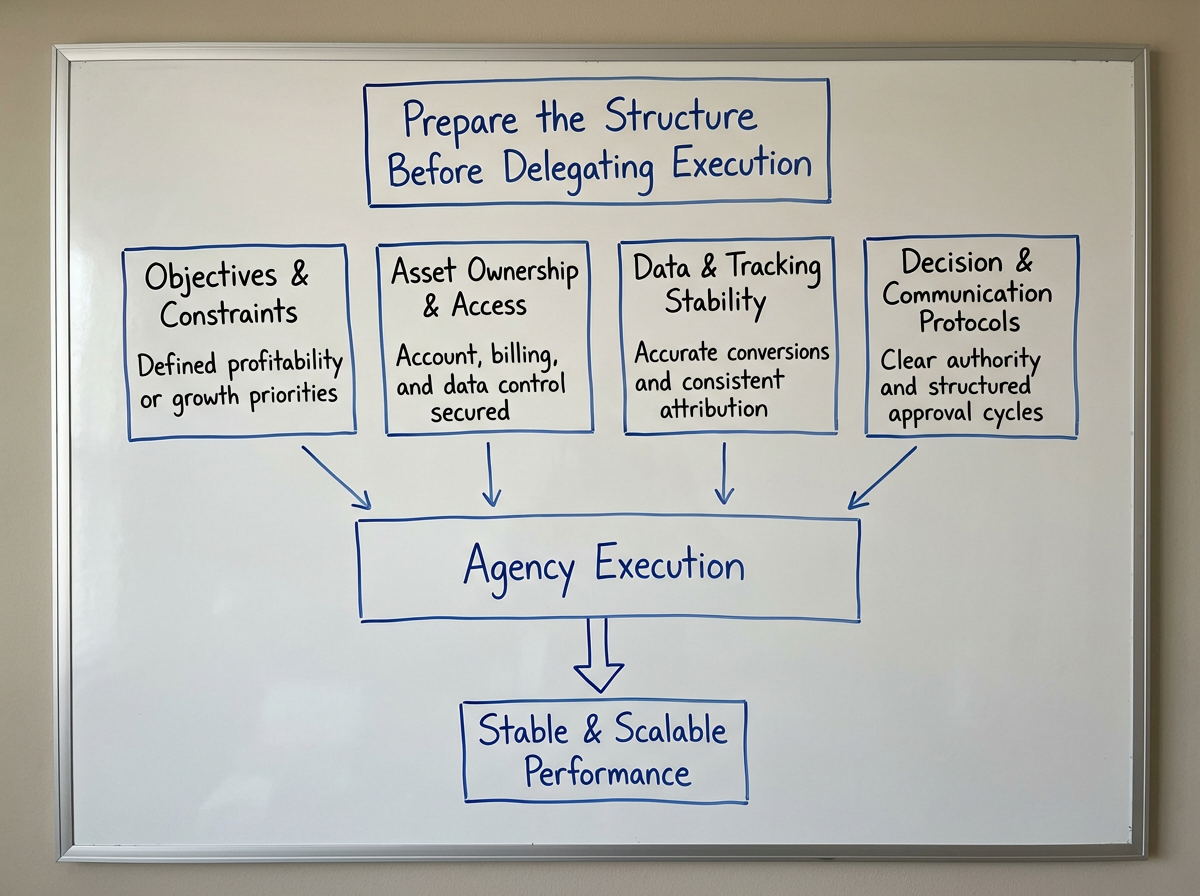
Final Thoughts: Prepare the Structure, Then Delegate Execution
Working with a Google Ads agency is a performance partnership built on shared goals, aligned expectations, and accountability. Campaign optimization amplifies whatever foundation already exists. When objectives are clear, ownership is secured, data infrastructure is stable, and decision protocols are defined, agency execution becomes significantly more efficient. Reporting becomes more meaningful and scaling becomes deliberate rather than reactive.
Preparation for a partnership like this may seem demanding. In reality, it is performance infrastructure. Control the structure. Delegate the execution.

Ready To Start Scaling Today?
Scaling Your Favorite eCommerce Brands To The Highest Levels Through Google & YouTube Ads.

.svg)
Get Smarter About How To Scale Your Brand...
Discover Insider Knowledge On How We Scale Brands From 7 Figures All The Way Up To 8-9 Figures With Google Ads.
.svg)
.svg)
"The best Google ads agency there is. You only need to look at the quality of clients and the reviews to understand Jackson and his team are the real deal."

"One of the best in the agency space, great service and exceptional results. Since signing on with Jackson he has become one of our greatest assets when scaling."

"Top tier team & service delivery. Jackson is relentless when it comes to fulfilment & client needs. His attention to detail during the onboarding process ensured exponential results for my coaching business. If you're looking to elevate your ad results & learn a tone of new options/skills that can be implemented to drive more sales to your business then I'd strongly recommend Echelonn."

"From the very first conversation with Jackson and his team, it was clear that we had found a Google Ads agency that prioritises results above all else. Their collaboration between data-driven experts and a skilled copywriter creates a dynamic duo for Google advertising success..."

"Been working with them for 9 months and it's been a great experience. Jackson and his team know what they are doing and always goes above and beyond. If you're looking for a reliable Google ads agency this is the one."

"The best Google ads agency there is. You only need to look at the quality of clients and the reviews to understand Jackson and his team are the real deal."
"One of the best in the agency space, great service and exceptional results. Since signing on with Jackson he has become one of our greatest assets when scaling."
"Top tier team & service delivery. Jackson is relentless when it comes to fulfilment & client needs. His attention to detail during the onboarding process ensured exponential results for my coaching business. If you're looking to elevate your ad results & learn a tone of new options/skills that can be implemented to drive more sales to your business then I'd strongly recommend Echelonn."
"From the very first conversation with Jackson and his team, it was clear that we had found a Google Ads agency that prioritises results above all else. Their collaboration between data-driven experts and a skilled copywriter creates a dynamic duo for Google advertising success..."
"Been working with them for 9 months and it's been a great experience. Jackson and his team know what they are doing and always goes above and beyond. If you're looking for a reliable Google ads agency this is the one."
More Articles Like This.
Find answers to common queries about our services and how we can help you.
.svg)
Performance Max Audience Signals Explained
Google Ads Optimization Score: Should You Trust It?
What Is a Good CTR for Google Ads?
Why More Google Ads Spend Doesn't Always Mean More Revenue
How To Rank Your Google Shopping Ads Multiple Times
Why Your Google Ads Scale Breaks After $X Per Day
How to Tell if Your Google Ads Agency Is Underperforming
Why Your Performance Max Campaign Gets Clicks but No Sales
.png)
Why Your Google Ads Budget Isn't Spending (And How to Fix It)

The Right Way to Run Google Dynamic Search Ads
How to Get New Customers With Google Ads in 2026
Why Your Google Ads CPA Keeps Increasing and How to Reduce It
What Is a Good ROAS for eCommerce Businesses?
How to Set Up Google Ads Conversion Tracking the Right Way
How Much Does a Google Ads Agency Cost?
Why Your Google Ads Are Not Converting
.png)
Average CPC in Google Ads by Industry (And What It Means for Your Strategy)
Performance Max vs. Shopping Campaigns: Which One is Better?

Why Your Google Shopping Ads Get Impressions But No Clicks (Image Optimization Guide)
Why Your Google Ads Are Not Showing

YouTube Ads Targeting Framework That's Driven $10M+ for eCommerce Brands

What Professional Google Shopping Ads Management Looks Like
How Much Do Google Ads Cost in 2026?

Should Your Business Use Google Search Ads or Performance Max?

Performance Max Best Practices for Sustainable Growth
.png)
Google Shopping Ads Audience Targeting: What Actually Impacts Performance
.png)
How to Write Google Search Ads That Actually Convert
.png)
6 Google Shopping Feed Best Practices That Drive Better ROAS
%20(1).png)
How to Get Your Products Recommended by AI (ChatGPT, Google AI & More)
.png)
Common Google Ads Myths That Cost Businesses Money
.png)
7 Benefits of Google Shopping Ads for Your eCommerce Business
.png)
How to Switch Google Ads Agency Without Losing Performance or Data
.png)
Demand Capture vs Demand Generation: Where Google Ads Fits
How to Prepare Your Business for Working With a Google Ads Agency

How to Avoid Wasting Budget on the Wrong Searches With Google Ads Keyword Match Types
Google Ads Account Ownership: What Businesses Should Know Before Hiring an Agency
.png)
Landing Page Optimization Strategies That Increase Conversions
SEO and Google Ads: How Search Engine Optimization and Paid Search Work Together
Types of Remarketing in Google Ads: How Each One Works and When to Use It
Google Ads Keyword Research: How to Find Keywords That Actually Convert
.png)
What Is Google Performance Max and How Does It Work?
.png)
How Advertorials Support High-Intent Google Ads Funnels
%20(Canva%20Template).png)
How Audience Targeting Works in Google Search Ads (and When to Use It)

Google Ads for New Brands: What to Know Before Spending Your First Dollar
.png)
What Is a PPC Agency – and When It Makes Sense to Hire One
.png)
How to Improve Your Google Ads Conversion Rate

.png)
The Right Way to Link Shopify and Google Ads for Scalable Growth
Google Shopping Campaigns Setup Guide 2025
%20(2).png)
Should You Run Google Ads for Your Website? (Honest Answer)
Confessions of a Google Ads Auditor: The Worst Mistakes We See Inside eCom Accounts

How to Spy on Competitor Google Ads: Complete 2025 Guide
%20(2).png)
7 Questions to Ask Before Hiring a Google Ads Consultant
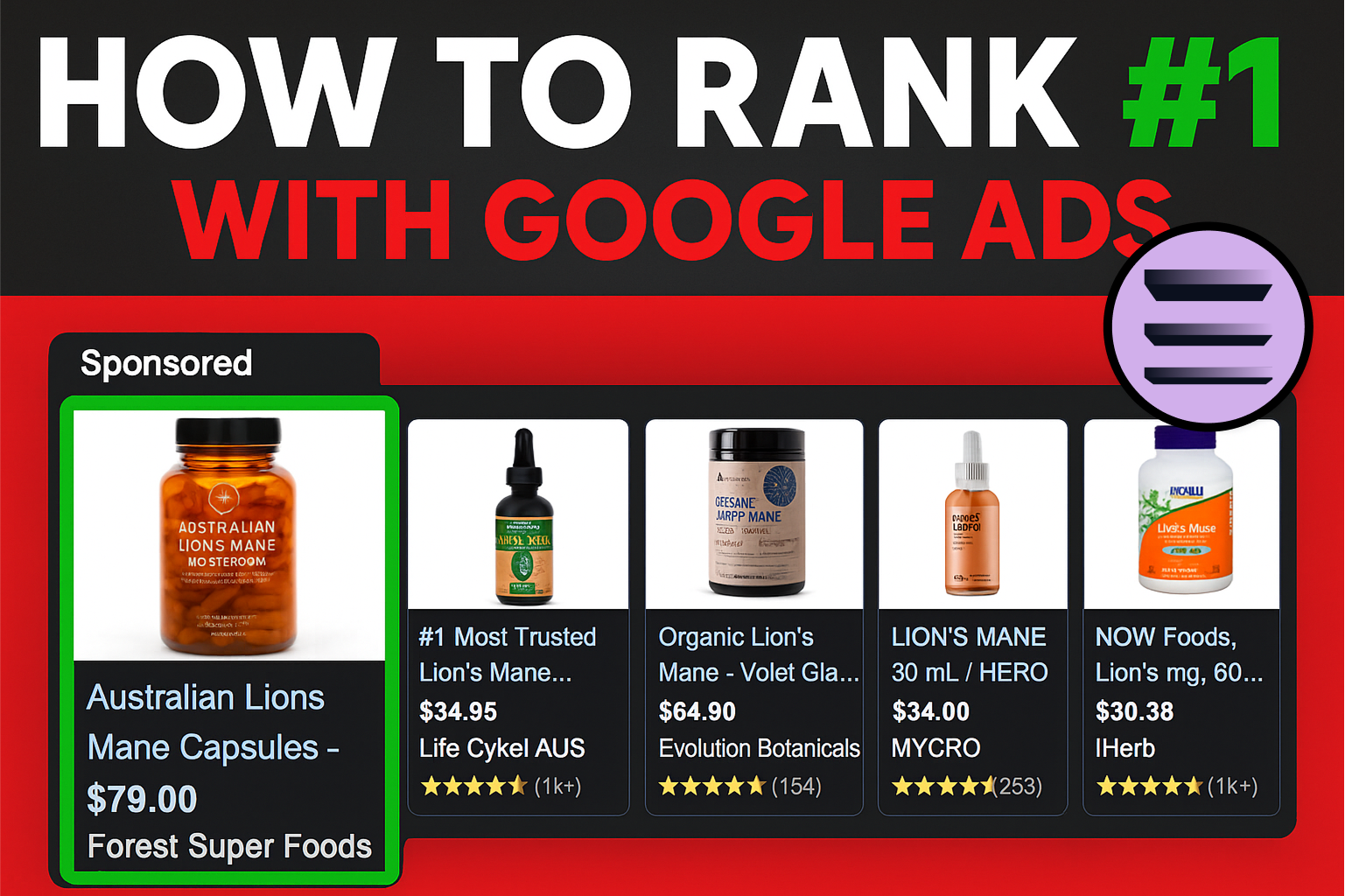
How to Rank #1 on Google Ads: Complete Shopping & Search Guide 2025
.png)
Learning Google Ads in 2025: The Roadmap Nobody Talks About
%20(1).png)
What Makes a Google Ads Specialist Worth $10,000/Month?

Why Cheap Google Ads Consulting Costs You $180,000+ in Lost Revenue
.png)
Why 99% of Google Ads Experts Fail (& How to Find One That Won’t)
.png)
5 Google Product Feed Fixes for eCom Growth
.png)
Google Ads Campaign Structure: Why 95% of Brands Waste Budget on Mixed Traffic

In-House vs Agency Google Ads: Which Delivers Better ROI in 2025?
.png)
How to Scale Google Ads With a Small Budget | Setup and Optimization

Google Shopping Optimization: 11 Proven Tactics for Maximum ROAS
%20(3).png)
eCom Growth Strategy: How We Scaled a Supplement Brand From $1.9M to $8.6M With Google Ads
%20(4).png)
Google Merchant Center Fix: How to Improve Rankings With Accurate Shipping Times

CTR Is Misunderstood by 95% of the PPC Industry (What to Optimise for Instead)
.png)
Google Ads AI | Manual vs Automated Campaign Performance

Complete YouTube Ads Guide 2025 | 3 Formats, 5 Principles, Proven Results
%20(2).png)
eCom Growth Strategy With Google Ads in 2025
.png)
Google Marketing Live 2025: 11 Key Takeaways for Marketers
%20(1).png)
YouTube Advertising Strategy: How to Drive Results Across Every Format
Google Shopping Feed Optimisation: Tips for Better Results

How Long Does it Take for Google Ads to Work?

YouTube Ads Cost in 2025: How to Launch & Optimize a YouTube Advertising Campaign

Search Ad Strategies to Maximize Sales with Google ads for eCommerce (2024)

2025 Google Shopping Ads: Ultimate Guide, Benchmarks, and Pricing Breakdown

Maximizing ROI with Advanced Google Shopping Bid Strategies and Automated Bidding